Word of the Year Is Human: Things Made by Hand in the North Aegean
The Cambridge Dictionary chose “human” as its word of 2026. We followed the trail of things made by hand in the North Aegean: from the Çanakkale and Ezine carpets at the Metropolitan Museum of Art to Bergama’s women weavers, Babakale’s last knife maker and the pine cone pickers of Kozak.
On 17 November 2026 the Cambridge Dictionary announced its word of the year: human. According to the dictionary, this was a year shaped by debates on what it means to be human while AI blurs the line between people and machines. The dictionary team also notes that phrases such as “human-made” and “human author” are being used more often: saying that a person, not a machine, stands behind a piece of work has become information in its own right.
We turned the question to the North Aegean and followed the trail of things made here by human hands. Some of them now sit in a museum in New York; others live on at a village cooperative’s loom or in a single master’s workshop. At the end of this piece you will find a short list of where to see them.
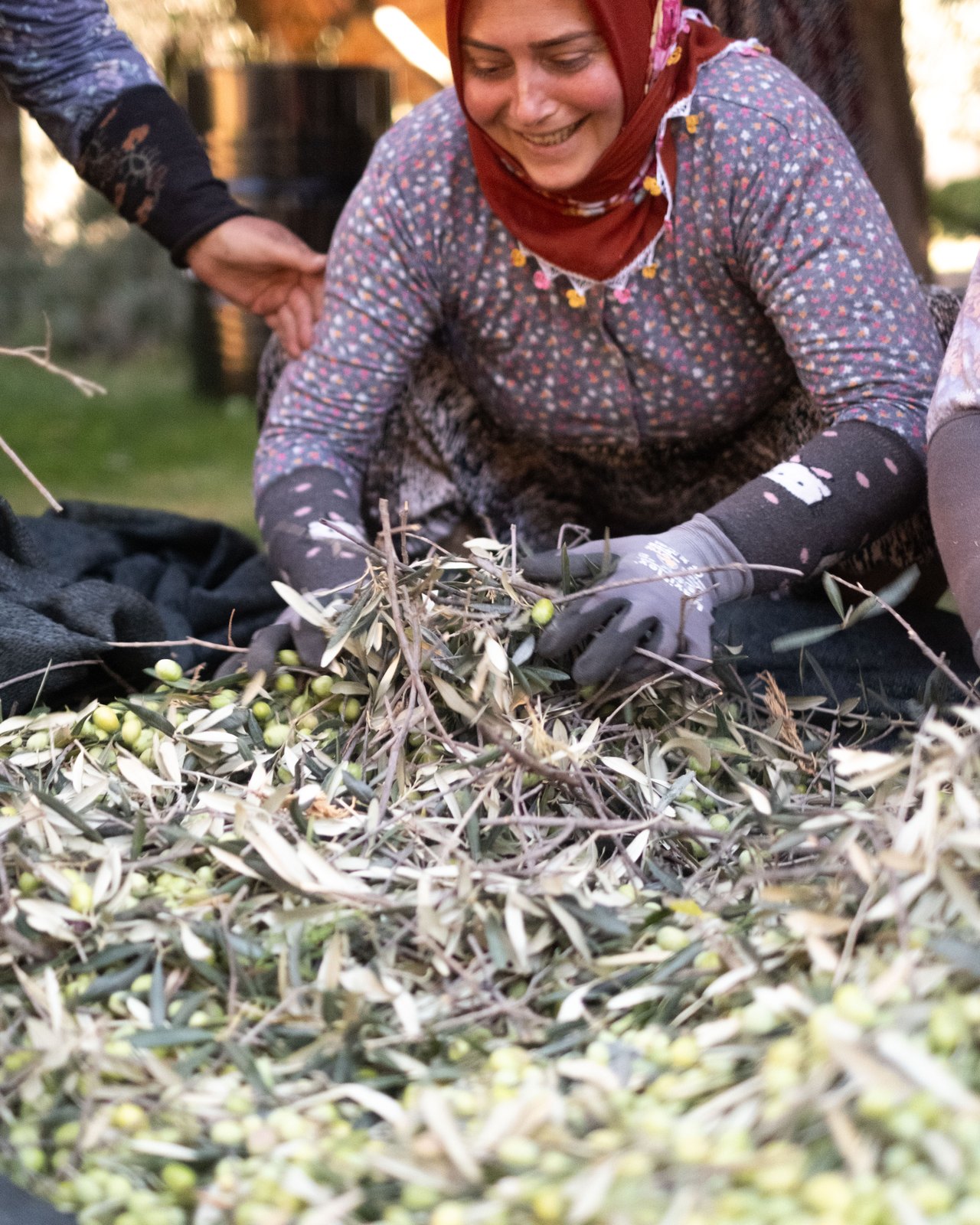
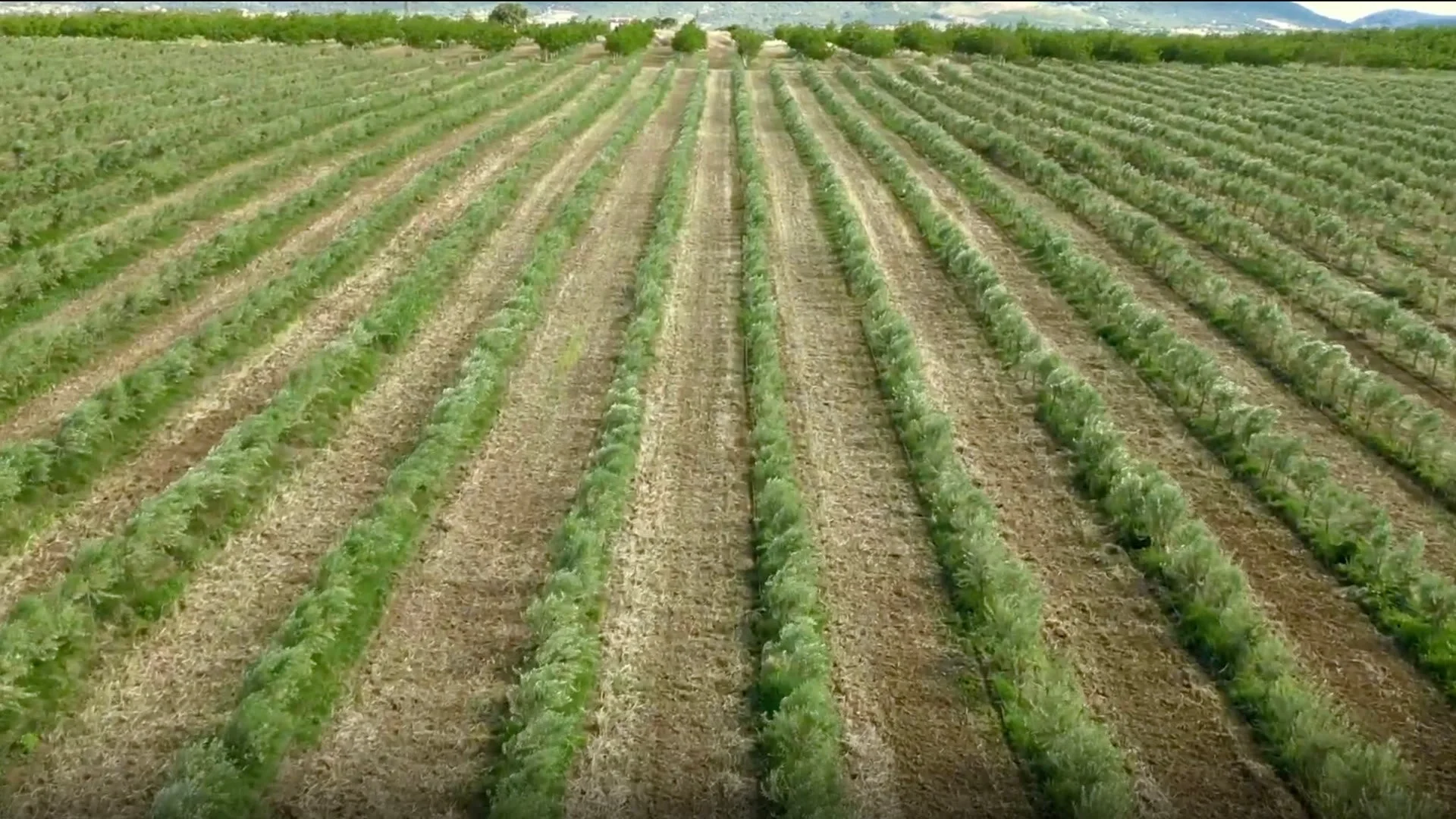
October 2026, olive harvest in the North Aegean. Photo: Kuzey Ege’ye archive
A Çanakkale carpet in New York
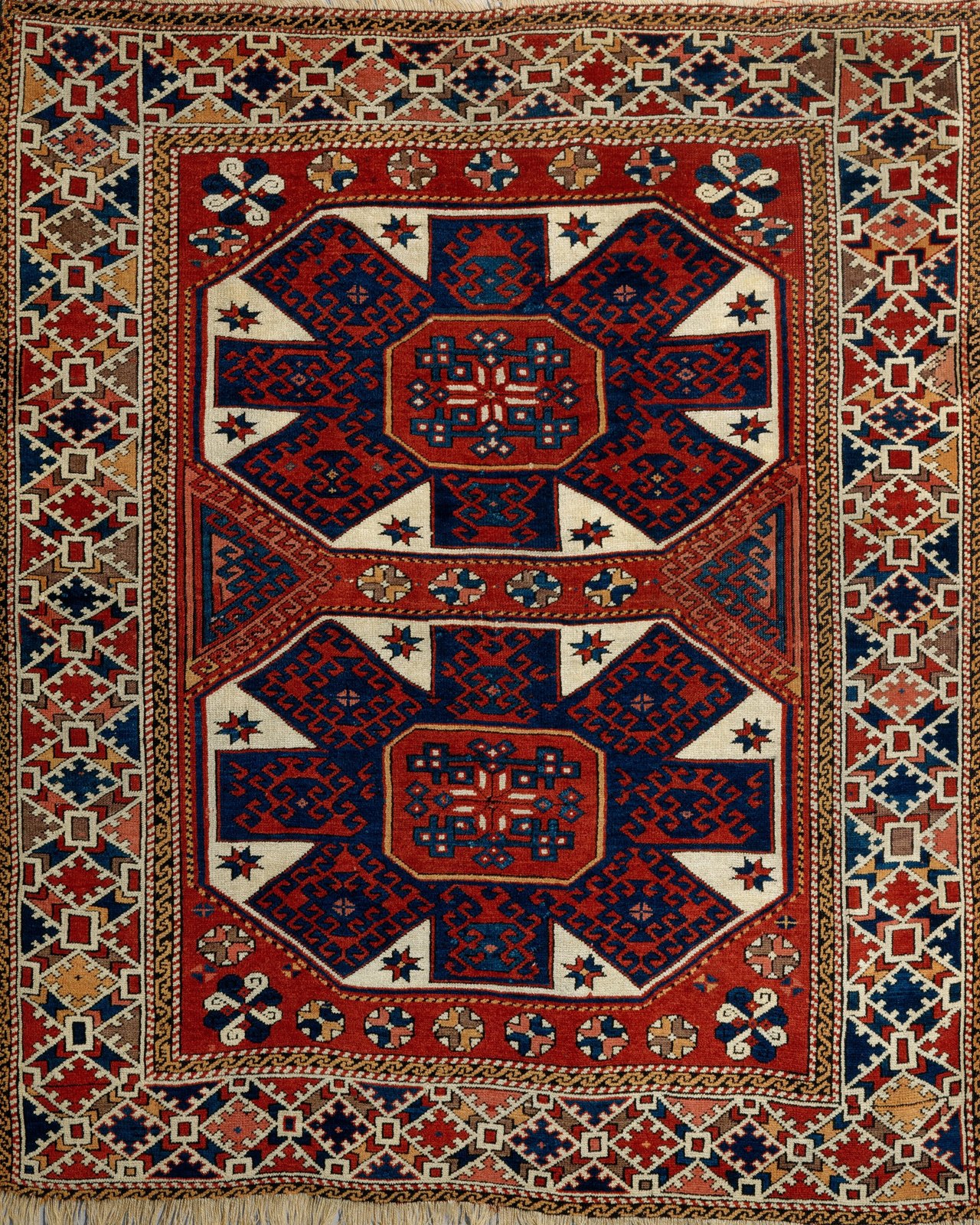
Carpet attributed to Çanakkale, late 18th to early 19th century. The Metropolitan Museum of Art, New York, public domain.
The Islamic Art collection of the Metropolitan Museum of Art (the Met) in New York includes a carpet attributed to Çanakkale. The museum dates it to the late 18th or early 19th century. It is woven in wool with symmetrical knots, also known as the Turkish knot, and measures 191.8 by 146.7 centimetres. It entered the museum in 1973 as a bequest of the collector Joseph V. McMullan and is on view today in Gallery 459.
At the centre of the design are two large octagons inscribed with stars. According to the Met, this composition has been favoured by Turkish weavers since the 15th century and takes its name from the 16th-century German painter Hans Holbein, who depicted a similar carpet in one of his portraits. This is why the layout is known as “Holbein” in the carpet world.
Carpets that carry the name Ezine
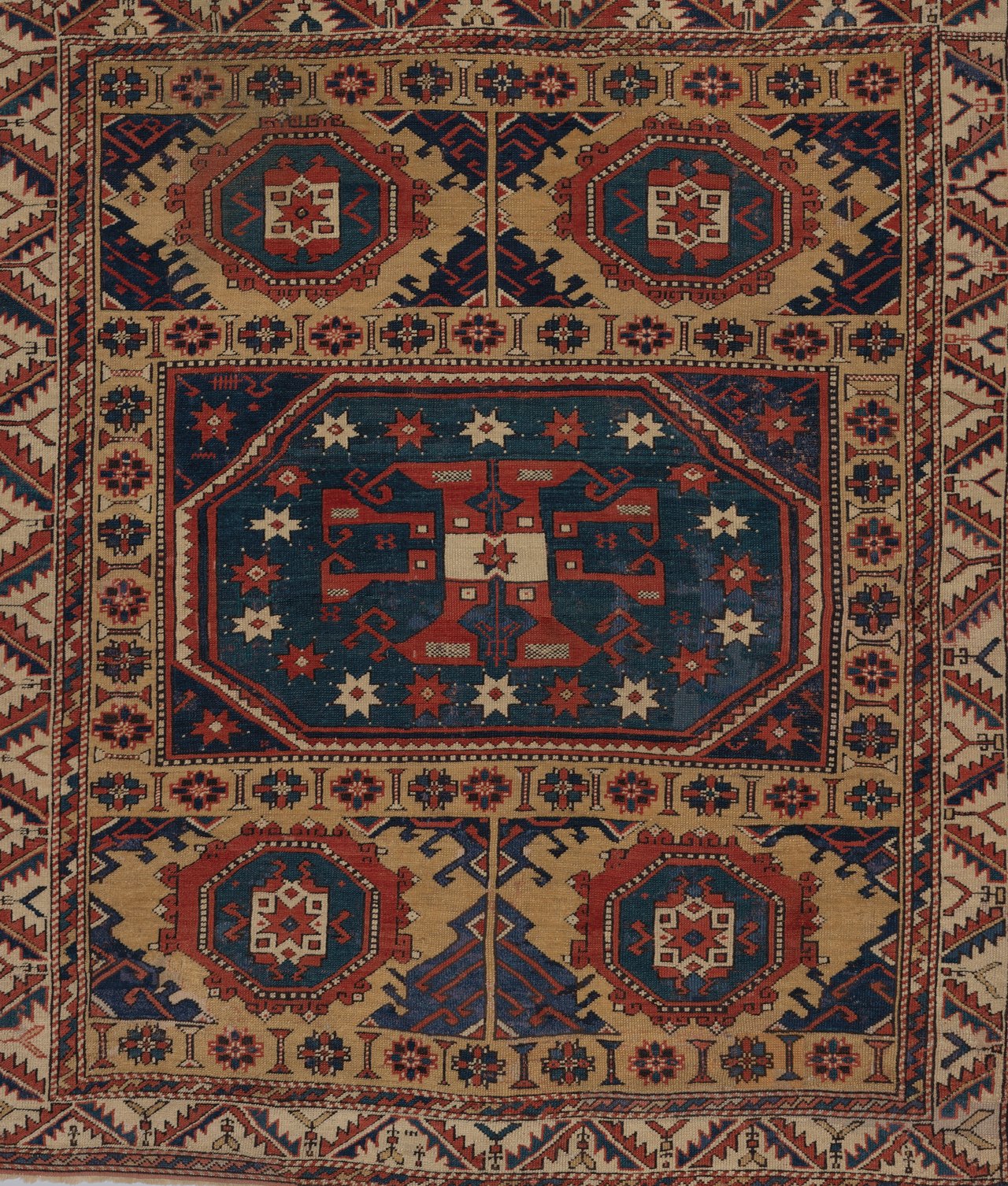
The carpet the Met calls “Holbein Ezine”, early 19th century. The Metropolitan Museum of Art, public domain.
The same collection holds two more carpets linked to Ezine. The museum attributes one of them directly to Ezine: it was given in 1959 by Mr. and Mrs. Reginald P. Rose, measures 188.6 by 162.6 centimetres, and its design is again built on two large octagons. The other is catalogued as the “Holbein Ezine Carpet”; it is dated to the early 19th century and attributed to Northwest Anatolia.
Neither is on view at the moment, but both can be seen in high-resolution photographs in the museum’s online collection. The records use the word “attributed”: the museum considers these carpets to have been woven in this region.
Çanakkale ceramics: plates of the Dardanelles
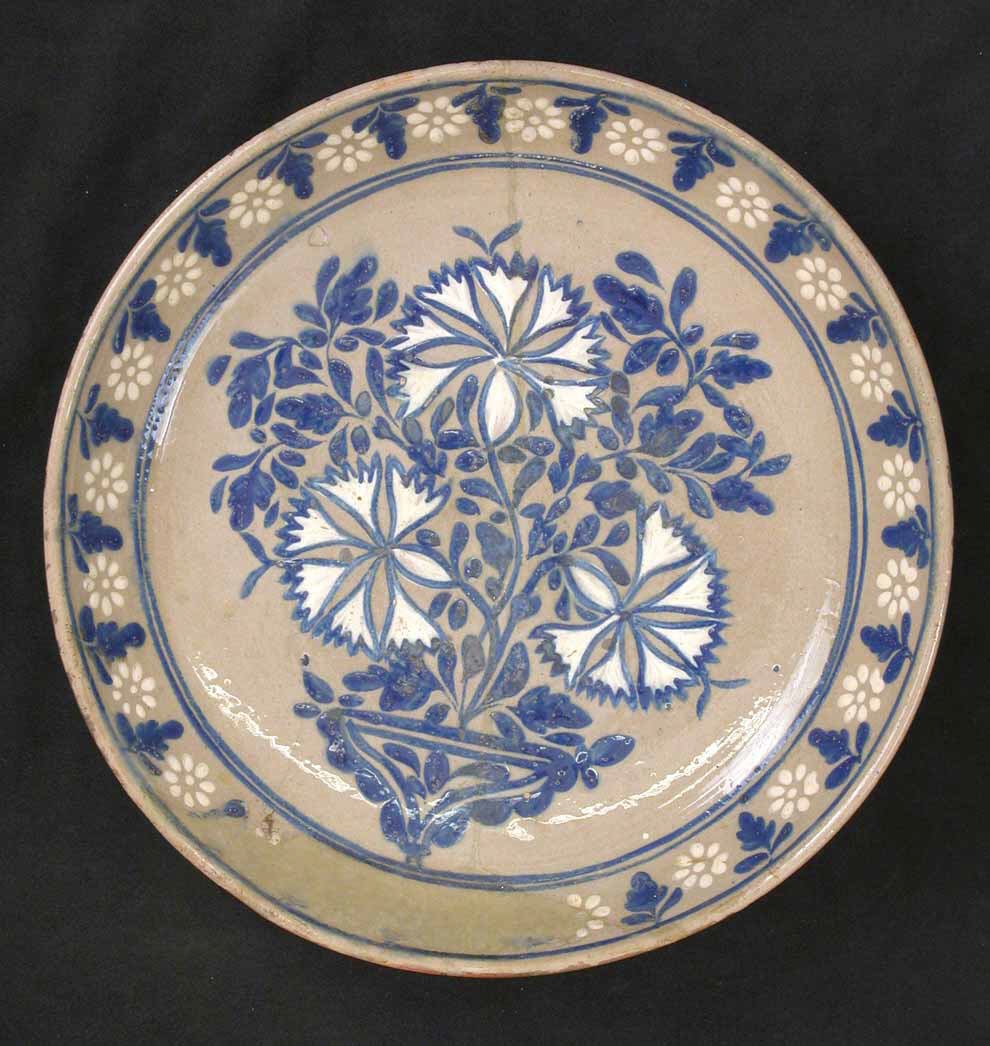
Dish attributed to Çanakkale, 18th century. The Metropolitan Museum of Art, public domain.
This dish is another work the Met attributes to Çanakkale. Dated to the 18th century, it is made of earthenware, slip-painted by hand and glazed, and measures 31.4 centimetres across. The museum acquired it in 1908.
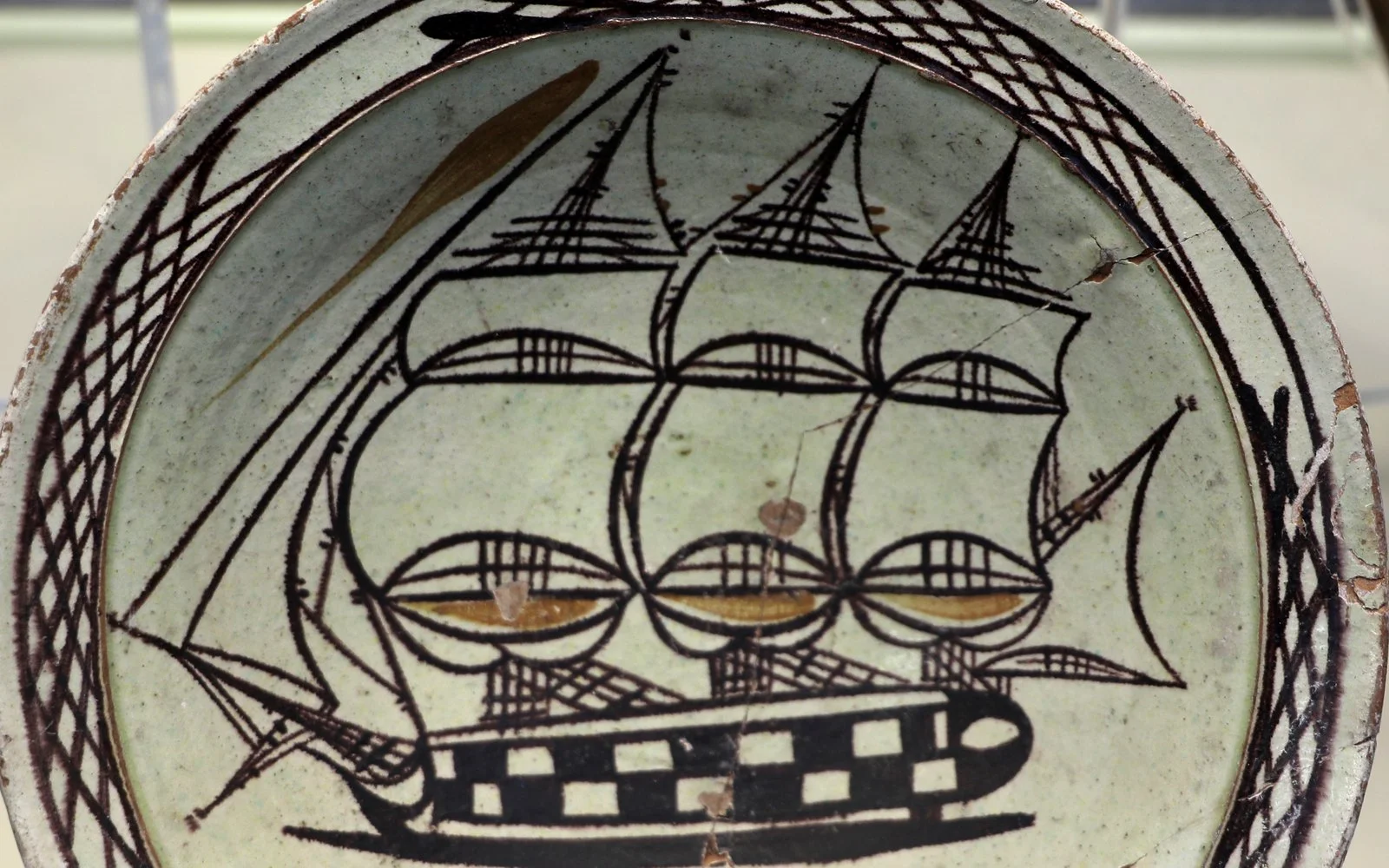
From the 17th century to the early 20th, Çanakkale was one of the important ceramic centres of the Ottoman world. Its plates, jugs and flasks carry flowers, animals, mosques and sailing ships. The ship plate on the cover of our Instagram post is one of them: it dates from around 1750–1800 and is in the collection of the Tiled Kiosk (Çinili Köşk) in Istanbul.
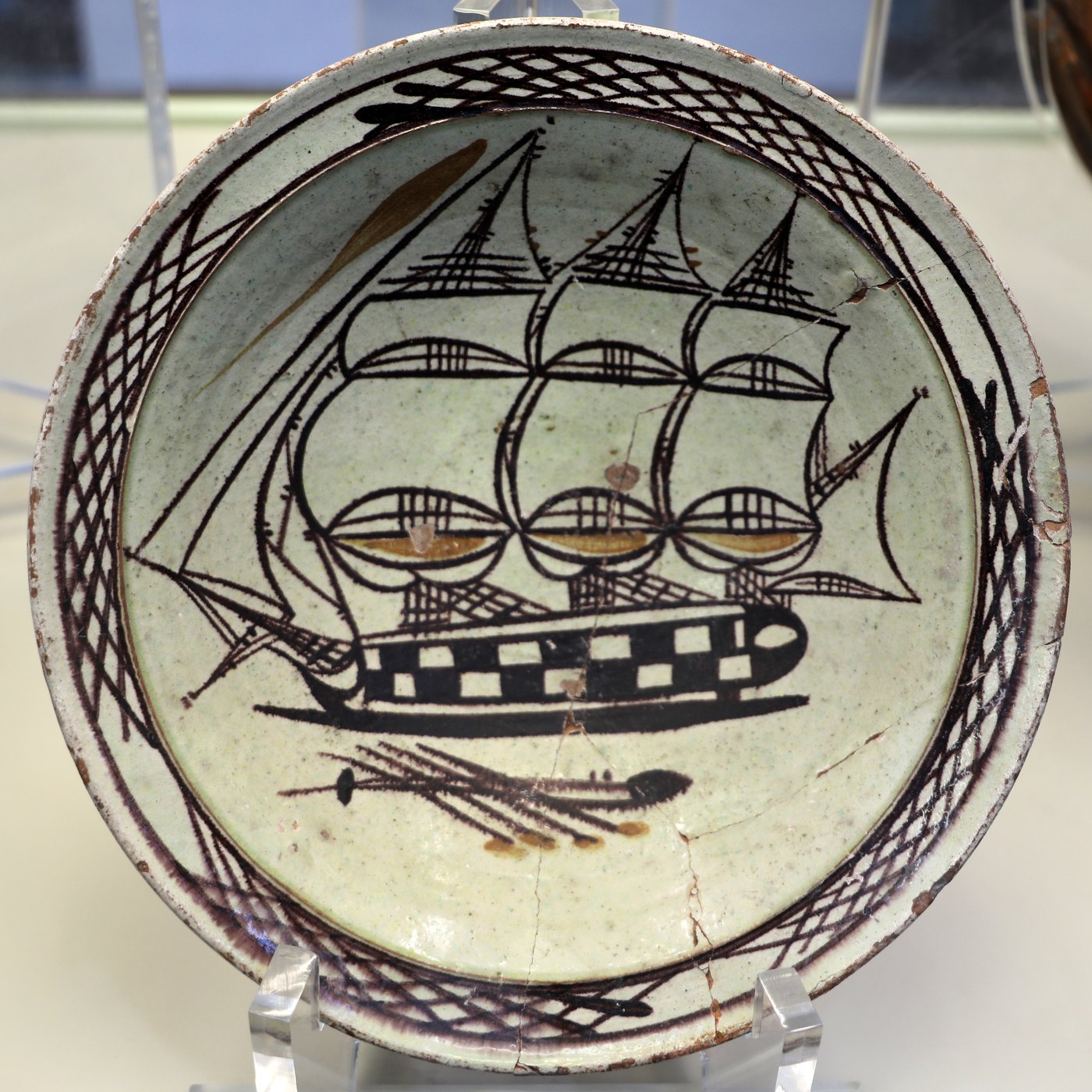
Çanakkale plate with a ship, around 1750–1800, Tiled Kiosk, Istanbul. Photo: Francesco Bini, CC BY-SA 4.0
In Çanakkale itself, you can see these ceramics at the municipality’s Ceramics Museum. The museum is housed in the Er Hamamı, a bathhouse built for soldiers in 1906, and shows Çanakkale ceramics from various collections alongside work by today’s ceramic artists and craftspeople. The address is Cevatpaşa Mahallesi, Kaya Sokak 33–35. It is open every day except Monday from 09:00 to 18:00, and entry is free.
In 2020 the Turkish Ministry of Culture and Tourism added the Çanakkale ceramics master İsmail Bütün to its list of Living Human Treasures in the field of Çanakkale Ceramics. Bütün learned the craft from his father, Ahmet Bütün.
Bergama: carpets back on the loom
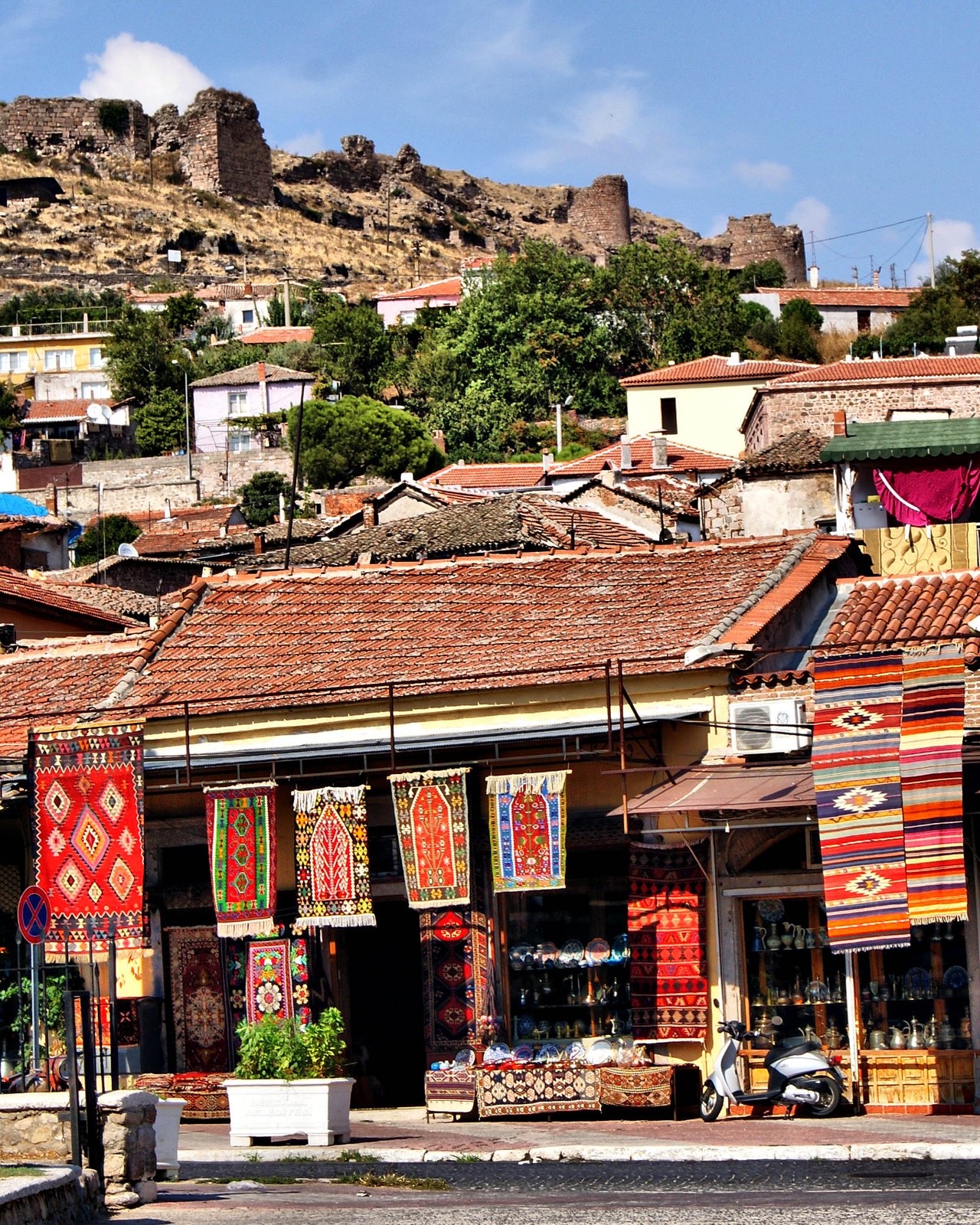
Carpet shops in Bergama with the acropolis above, 2012. Photo: Haluk Comertel, CC BY 3.0
Bergama is one of the important centres of Anatolian carpet weaving. Kadriye Yakar, who taught carpet weaving at Bergama’s Public Education Centre, founded a cooperative with her former students when she retired in 2009. The cooperative provides looms for women in the villages and the town centre, and today more than 150 women weave the region’s carpets, above all the Kız Bergama, Yağcıbedir and Holbein designs.
According to Yakar, there are more than 2,000 types of Bergama carpets and kilims. The cooperative is working with the İzmir Development Agency to bring Bergama carpets to the UNESCO list. The Holbein layout of the carpets in the Met is still being woven on women’s looms in Bergama today.
Ayvacık: fewer looms, and a village that started again
In the 1980s Ayvacık carpets and kilims returned to natural dyes. In 1982 the Süleymanköy and Surrounding Villages Development Cooperative launched DOBAG (Natural Dye Research and Development Project) together with Marmara University, and villagers began dyeing wool with chamomile, madder root, chaste tree, valonia oak acorns and oak galls. With a carpet workshop set up under the district governorship as well, Ayvacık carpets enjoyed a golden age at home and abroad.
According to researchers who carried out fieldwork in the area in 2024–2025, both organisations closed in the first quarter of the 2000s. Carpets were woven in 34 villages in 2003; by 2023 the number had fallen to 5, and sourcing raw materials such as wool and root dyes, as well as reaching buyers, had become harder.
There is a hopeful example too. In the village of Bektaş, the Bektaş Village Women’s Labour Agricultural Development Cooperative, founded two years ago, runs a cultural heritage workshop where carpets, kilims, ehram shawls, çulluk cloths and plain cloth are woven. The cooperative has 25 members; its chair, Güldan Özkan, has been weaving carpets for 45 years, and the cooperative plans to open weaving courses for anyone who wants to learn.
Babakale: the village’s last knife maker
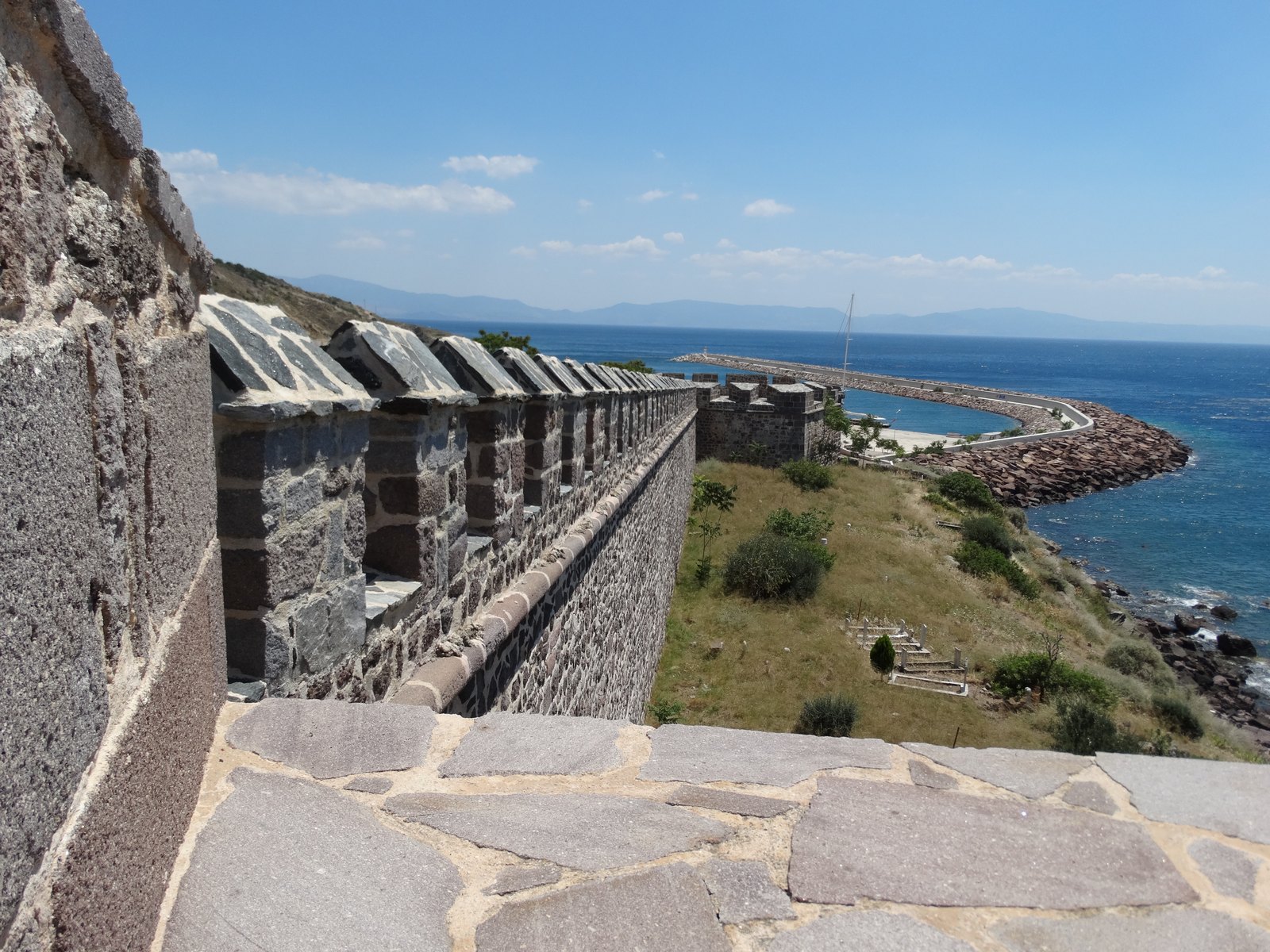
The harbour seen from Babakale Castle, 2021. Photo: Leon petrosyan, CC BY-SA 4.0
Knife making has been a craft in Babakale since the 19th century. Villagers say it began with masters, reportedly brought from Kazakhstan, who made swords and daggers for the soldiers at the castle; when weapons were no longer needed, local craftsmen turned to knives. When steamers still traded with Istanbul, the village had 18 knife shops. The steamer service ended in 1958; by the early 2000s there were two shops, and today there is one.
The only master who still makes the Babakale knife is Doğan Tosun. The blade is steel, hammered on an anvil, heated in the fire and quenched in water; the handle is goat horn. The 0.30-millimetre nickel silver inlay between the horn plates is engraved by hand, and the bolster is brass. The master has trained two apprentices, one of them his son, and because he cannot keep up with demand he works only to order. He worries that young people in the village show no interest: apprentices used to start at 14 or 15.
Other crafts of Ayvacık live on as well. In the village of Ahmetçe women make counted-thread embroidery (hesap işi), and in Tamış they embroider handkerchiefs with a wrapping stitch. You can find Ahmetçe’s embroidery at the Friday market in Ayvacık.
Kozak: cone pickers in 25-metre pines
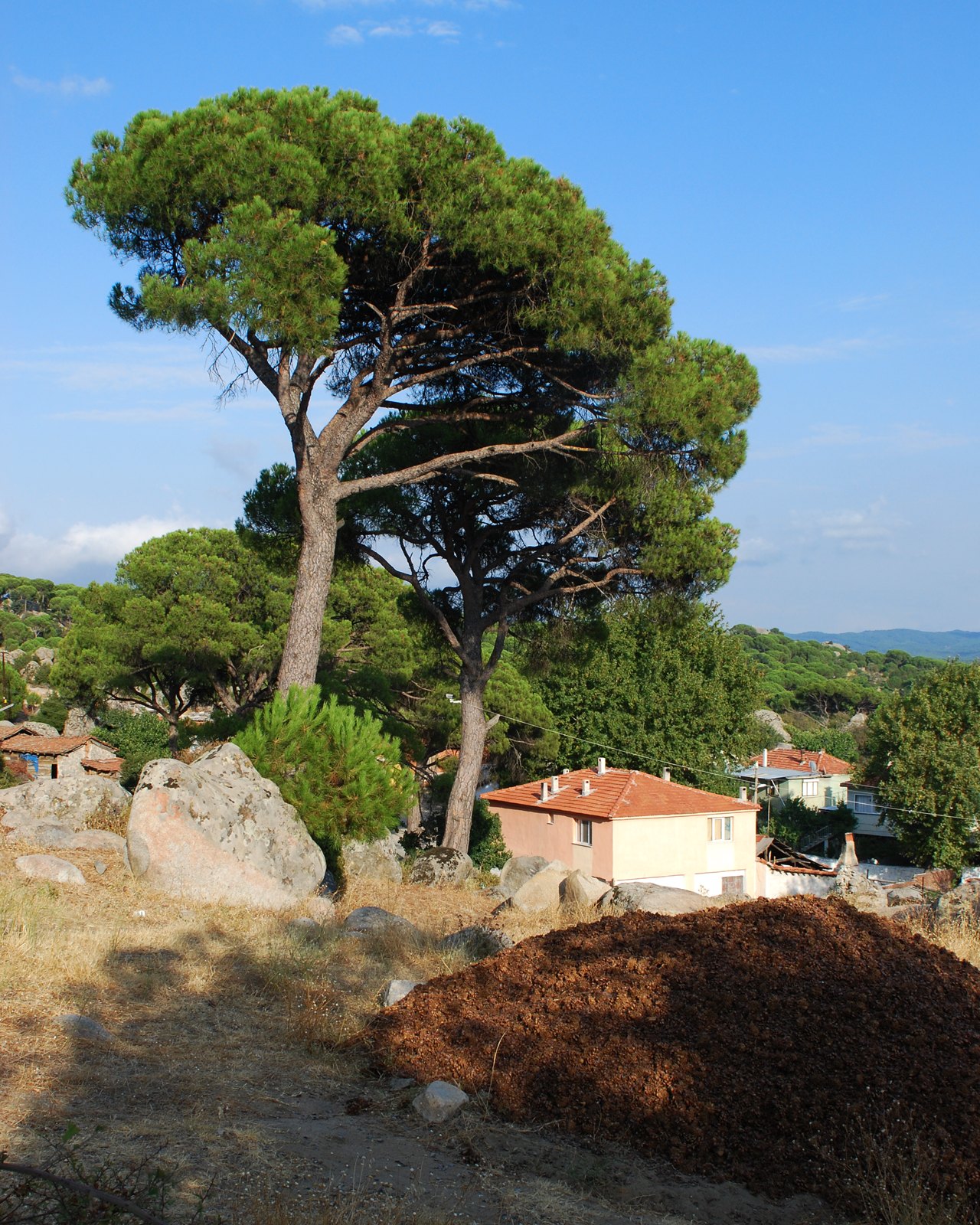
Stone pines on the Kozak plateau, Bergama, 2009. Photo: horsch, CC BY-SA 3.0
The Kozak plateau north of Bergama is known for its stone pines, and pine nuts are still harvested here by hand. Workers known as “cone pickers” work in teams of four or five, usually relatives or friends, climb trees up to 25 metres tall and knock the cones down with long poles.
The harvest starts in November and lasts about four months; the cones are stored through the winter. A 2024 study based on interviews with 33 cone pickers in Kozak found that the work is high-risk, that protective equipment is not widely used and that the number of pickers is declining. Most of them learn the trade within the family.
Where to see these crafts
Çanakkale Ceramics Museum (Er Hamamı): Cevatpaşa Mahallesi, Kaya Sokak 33–35, Çanakkale. Every day except Monday, 09:00–18:00, free.
The Metropolitan Museum of Art, New York: the Çanakkale carpet in Gallery 459; the Ezine carpets and the Çanakkale dish in the online collection.
Bergama: the carpet cooperative; Kız Bergama, Yağcıbedir and Holbein designs.
Bektaş village, Ayvacık: the women’s cooperative’s cultural heritage workshop; products are sold at the cooperative and on its website.
Ayvacık Friday market: counted-thread embroidery from Ahmetçe.
Babakale: Doğan Tosun’s knives, made to order.
Kozak plateau: the pine nut harvest, November to March.
Frequently asked questions
When did the Cambridge Dictionary announce its 2026 word of the year?
On 17 November 2026. The word is “human”. The 2025 word was “parasocial”.
Can I see the Çanakkale carpet at the Met?
Yes. It is on view in Gallery 459 of the Metropolitan Museum of Art in New York. The Ezine carpets and the Çanakkale dish are not on view at the moment but can be seen in the museum’s online collection.
When is the Çanakkale Ceramics Museum open?
Every day except Monday, from 09:00 to 18:00. Entry and events are free.
When is the pine nut harvest in Kozak?
It starts in November and lasts about four months.
Sources: University of Cambridge announcement (17 November 2026); Euronews (18 November 2026); The Metropolitan Museum of Art collection records 452581, 453581, 452576, 445234; Çanakkale Municipality Ceramics Museum page; Habertürk (10 December 2024); Yeni Asır (29 May 2026); Aksoy and Özkan, IJEPHSS 8(3), 2025; Buğday et al., Bartın Orman Fakültesi Dergisi 26(1), 2024; Cumhuriyet (17 November 2022).