From Geyikli to the World: The Story of Ninurta Olive Oil
Ninurta, ranked 6th among the world’s olive oil producers, grows its olives in Geyikli, the town you pass on the way to the Bozcaada ferry. What the ranking measures, the grove in Alemşah, the sunrise harvest, tasting notes for seven oils and how to taste olive oil at home.
This article was prepared in collaboration with Ninurta.
The road from Ezine down to Geyikli, where the Bozcaada ferry leaves, runs between olive groves on both sides. Most of us pass them in a hurry to catch the boat. Yet the olive oil from one grove right by this road placed 6th in the world producer ranking in 2025, on the strength of the awards it collected at international competitions. Its name is Ninurta.
In this article we take a closer look at Ninurta: what the ranking actually measures, what Geyikli gives the olive, why the harvest starts at sunrise and how the seven oils from the grove taste. At the end you will find how to taste olive oil at home, where to buy Ninurta and a discount code for Kuzey Ege’ye readers.
What does 6th in the world mean?
The ranking is published by EVOO World Ranking. It brings together the results of international olive oil competitions held around the world: every award is converted into points, and producers are ranked by the points they collect over the year. A place on the list reflects a full year of standing in front of different juries in different countries.
In the 2025 producer ranking, Ninurta placed 6th with 4,081 points. That year it entered 12 international competitions and won 82 awards; since 2016 its total has passed 150. The medals come from competitions stretching from Los Angeles to London, and from Italy and Spain to Japan and Argentina.
The same list also ranks countries. In 2025 Türkiye came 3rd, after Italy and Spain.
Geyikli: between the mountain, the strait and the island
Geyikli is a coastal town in the Ezine district, facing Bozcaada. Ferries to the island leave from its Yükyeri Pier; Bozcaada is 4 nautical miles away, about a 35-minute crossing.
Ninurta ties the character of its olives to this location and names three neighbours: the mineral-rich waters of the Kaz Mountains (Mount Ida), the cool wind of the Dardanelles and the iodine-laden sea air from Bozcaada. To these it adds the balance between sunny days and cool nights.
Anyone who knows the region will recognise the description. The North Aegean summer belongs to the poyraz, the northeasterly that comes down from the mouth of the Dardanelles and cools the coast; on its strongest days it can even halt the Bozcaada ferries. The ground warms during the day and cools at night, and growers say this swing helps the olives ripen more slowly and evenly. We describe the winds of this coast one by one in our wind dictionary.
The grove in Alemşah
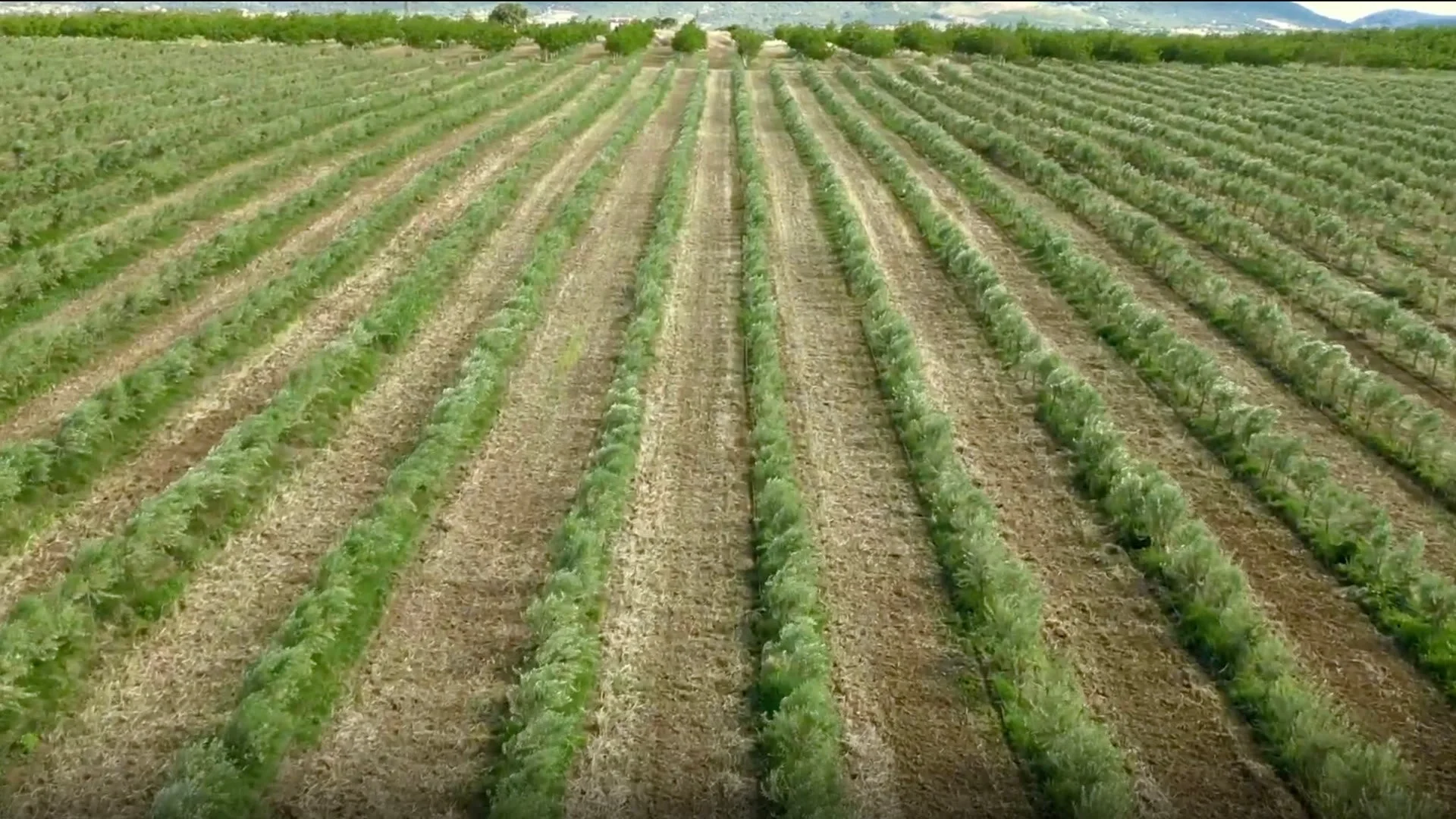
Ninurta’s grove lies in the village of Alemşah, right next to Geyikli. The brand operates under Yağmur Tarım Organik Ürünler A.Ş.; its production area covers about 800 decares (roughly 80 hectares) with nearly 100,000 olive trees. It takes its name from Ninurta, the god associated with farming in ancient Mesopotamia.
Local varieties and varieties from distant shores grow side by side in the grove. On one side are the North Aegean’s own: the Edremit olive of the Gulf of Edremit and Gelin Parmağı, known as a variety native to Geyikli. On the other are Trilye from the Marmara coast, Arbequina from Spain and Lecciana from Italy. The rows are planted for mechanical harvesting: the harvester straddles the row of trees and takes the olives straight from the branch.
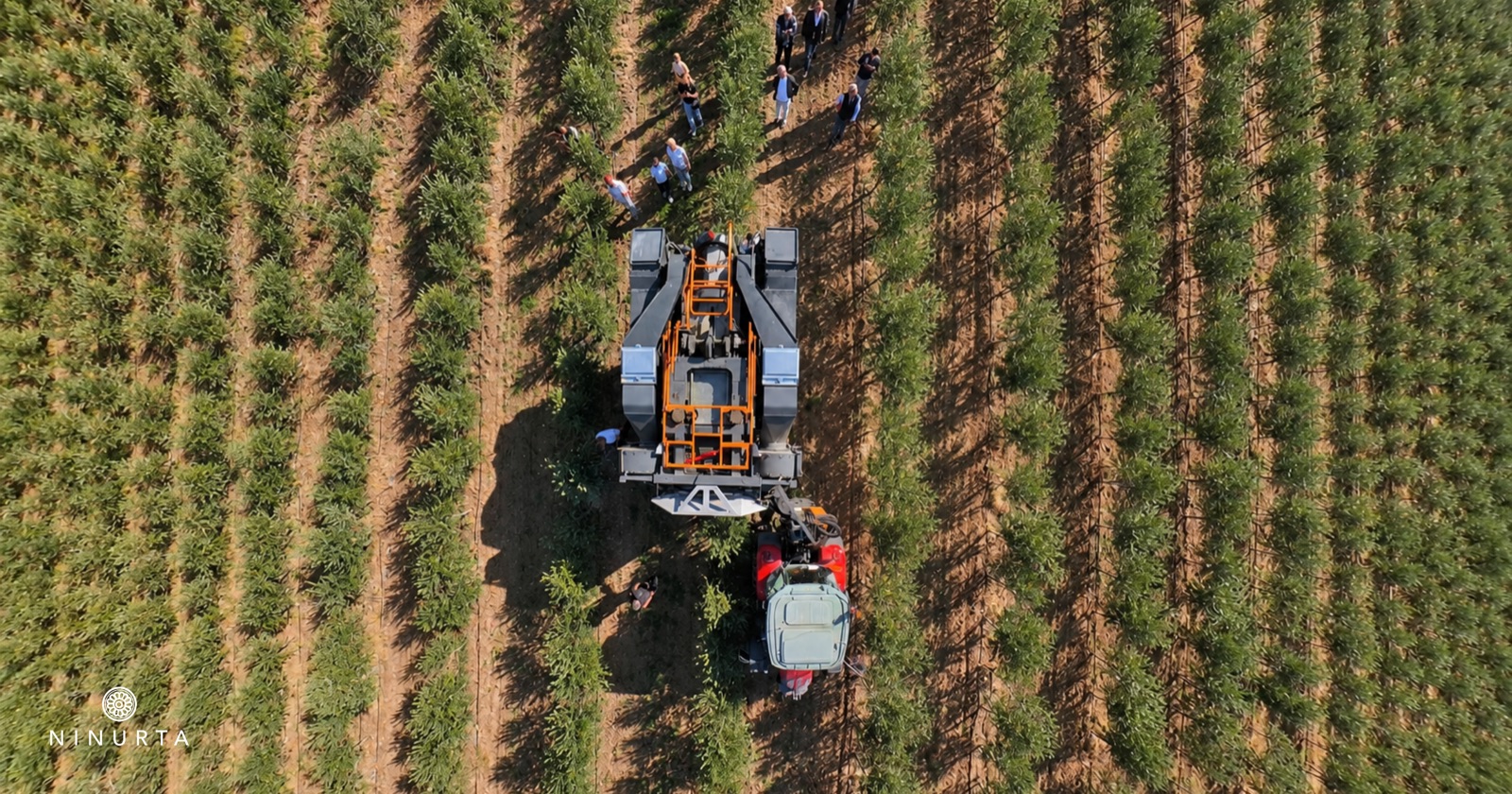
Mechanical harvest in the grove in Alemşah. Photo: Ninurta
This year’s harvest opened with a festival in the grove on 10 October 2026. The day began with a zeybek folk dance, and new-generation harvesters were demonstrated between the rows. Chef Maria Ekmekçioğlu led a “From Soil to Table” workshop with the new-season oils, olive oil expert Birsen Can ran a tasting, and food writer Zeynep Kakınç spoke about the place of the Gelin Parmağı olive in the region.
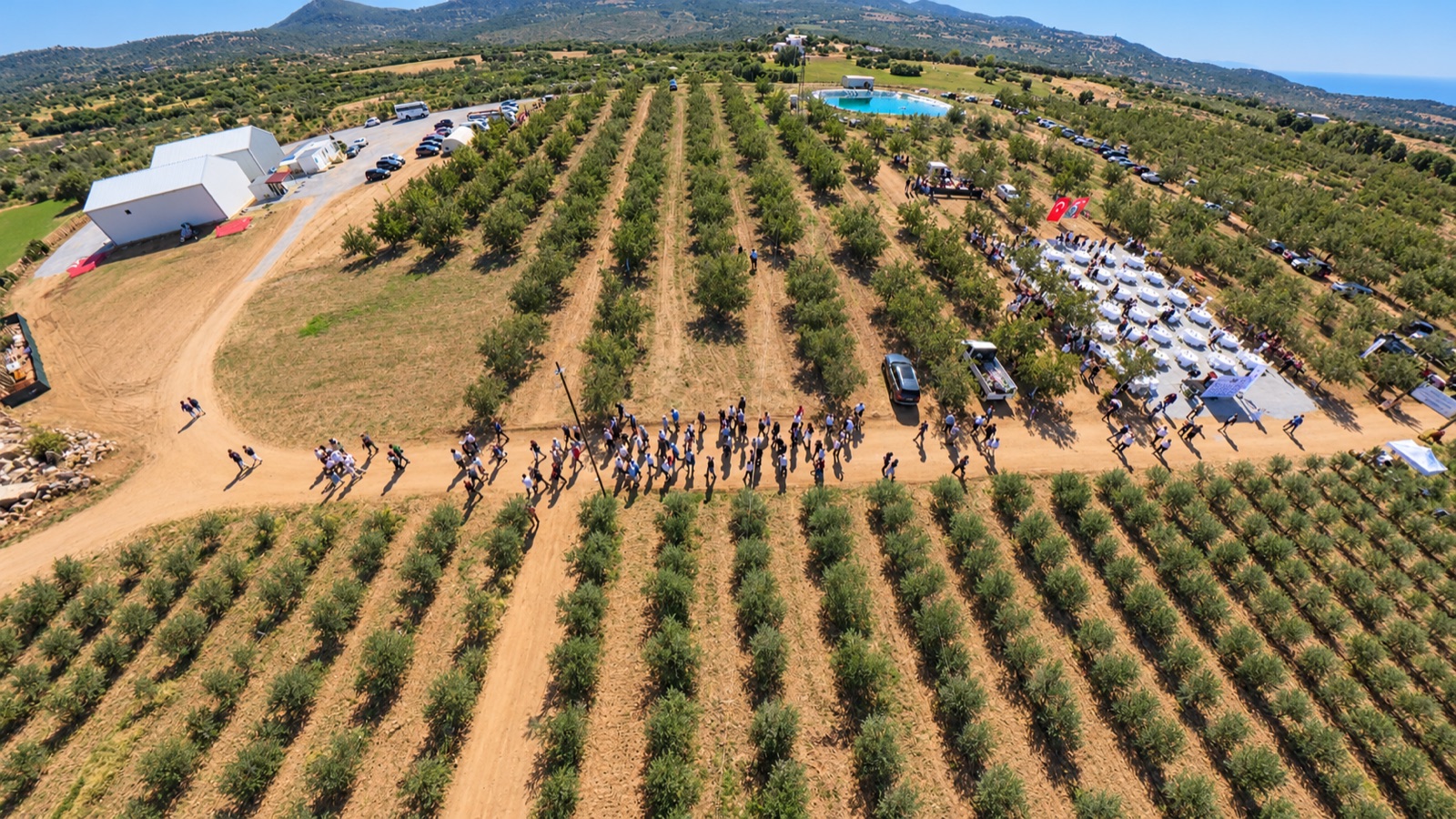
The grove in Alemşah on the day of the Harvest Festival, 10 October 2026. Photo: Ninurta
The harvest starts at sunrise
At Ninurta, the harvest runs through October and November and starts at sunrise. The olives are picked before they fully ripen, while they are still partly green, and go to the press on average within 3–4 hours of leaving the branch.
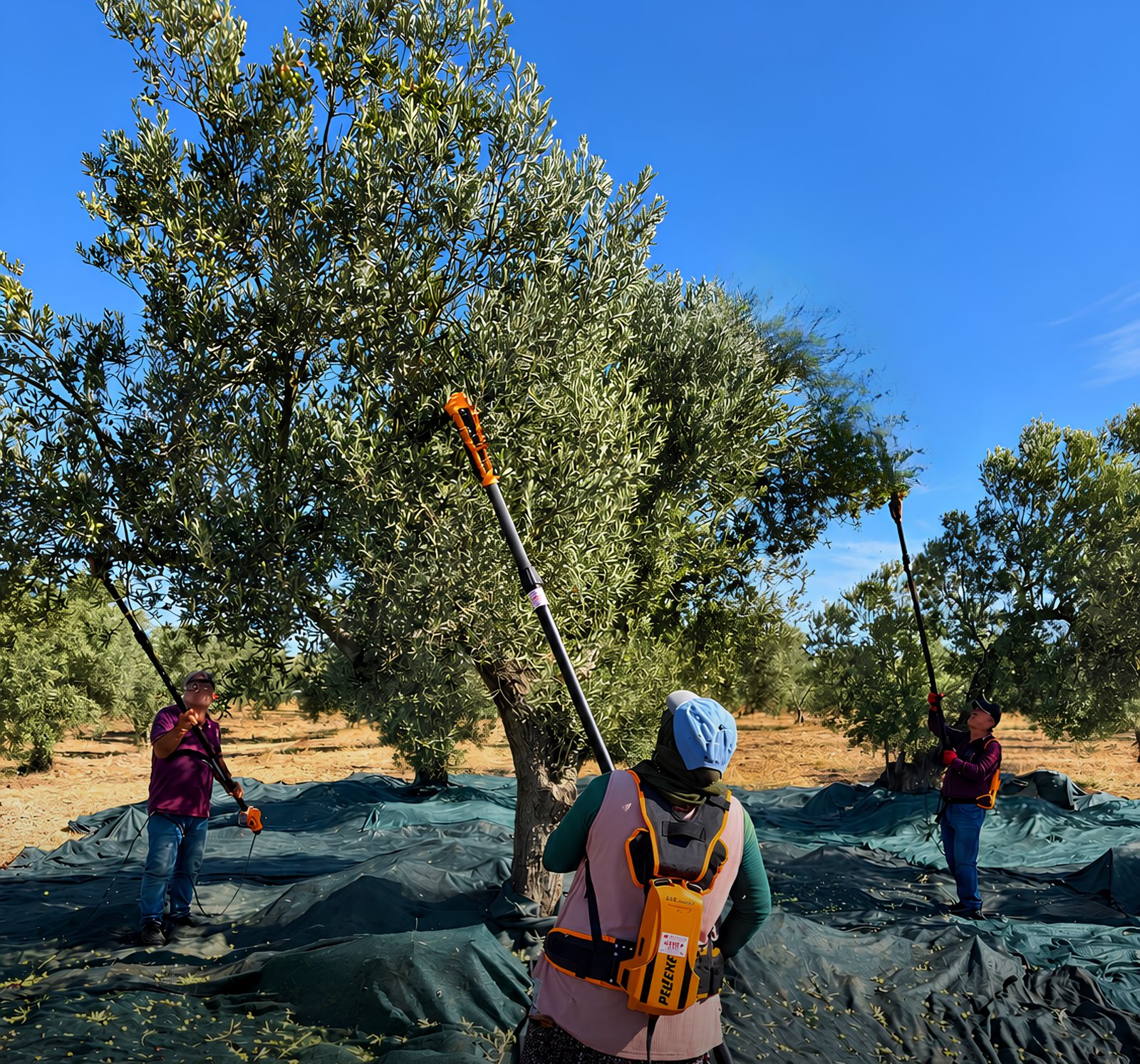
Ninurta’s 2026 harvest: nets spread under the trees and electric harvesting rakes. Photo: Ninurta
Pressing is mechanical and done below 25 °C; this is what cold pressing means. No chemical processing is involved. The oil is filled into metal tins that block out light; Gelin Parmağı is sold in a glass bottle.
Early harvest comes at a price: green olives yield less oil than ripe ones. In return, the oil is fresher, grassier and livelier. It leaves a light bitterness in the mouth and a gentle burn in the throat. These two sensations are the easiest way to recognise an early harvest oil.

Before the harvest, the olives still green. Photo: Ninurta
Tasting notes for the seven oils
Ninurta makes five single-variety oils and two blends. The tasting notes and serving suggestions come from the brand’s own product pages:
Arbequina. A fruity oil with notes of ripe banana, almond and apple; acidity 0.2%. Used at breakfast, in salads and even in desserts.
Edremit. The North Aegean’s own variety. An intense, characterful oil with aromas of ripe banana, artichoke and fresh leaves. For salads, fish and olive oil dishes.
Trilye. Rocket, cress, green almond, red apple and a distinct black pepper finish. For green salads, fish and cold meze.
Lecciana. A soft, balanced oil with a golden apple aroma. Best at breakfast and used raw.
Gelin Parmağı. A rare variety considered native to Geyikli, with notes of rocket, cress, green apple, almond and green coffee. With green salads and seafood.
North Aegean Blend. A balanced blend of North Aegean varieties. For everyday use, breakfast and pasta.
Troian Blend. The most complex profile, with black pepper, red pepper, green almond, green banana and asparagus. For meat dishes, stews and salads.
If you can’t decide where to start, Ninurta’s website has a four-question palate test that suggests a variety based on how you cook and how intense you like your oil.
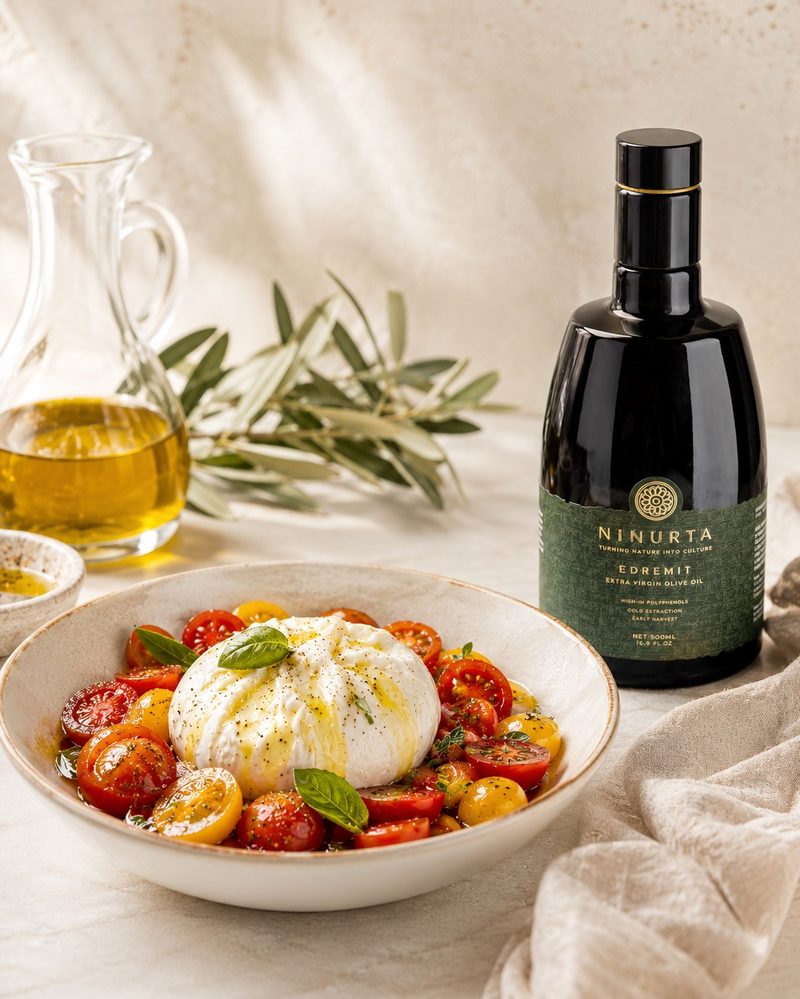
Edremit with burrata and tomatoes. Photo: Ninurta
How to taste olive oil at home
You don’t need to be a professional taster to judge a good extra virgin olive oil. Try this at home:
Pour about a tablespoon of oil into a small glass. Cover the top with your palm and warm it in your hand for a few minutes.
Lift your hand and smell. Freshly cut grass, green tomato, artichoke, almond or green apple are signs of oil made from sound, fresh olives.
Take a small sip and move it around your mouth. You will feel a light bitterness at the back of the tongue.
Swallow. A burn in the throat may follow, perhaps a small cough. This sensation, stronger in early harvest oils, is not a defect.
A stale or faulty oil gives itself away by its smell. Notes of old walnuts, paint or cardboard mean the oil has oxidised; vinegar or damp earth point to a problem in production.
When storing, watch out for light, heat and air. Keep the oil away from the stove, in a cool, dark cupboard with the cap tightly closed, and finish it within a few months of opening. When buying, look for the harvest date on the label; the freshest oil comes from the latest harvest.
Geyikli on the way to Bozcaada
In the olive groves of Geyikli, the harvest that begins in October continues through November. In these weeks, on the road down to the pier on your way to Bozcaada, you may see nets spread beneath the trees and tractors carrying crates of olives.
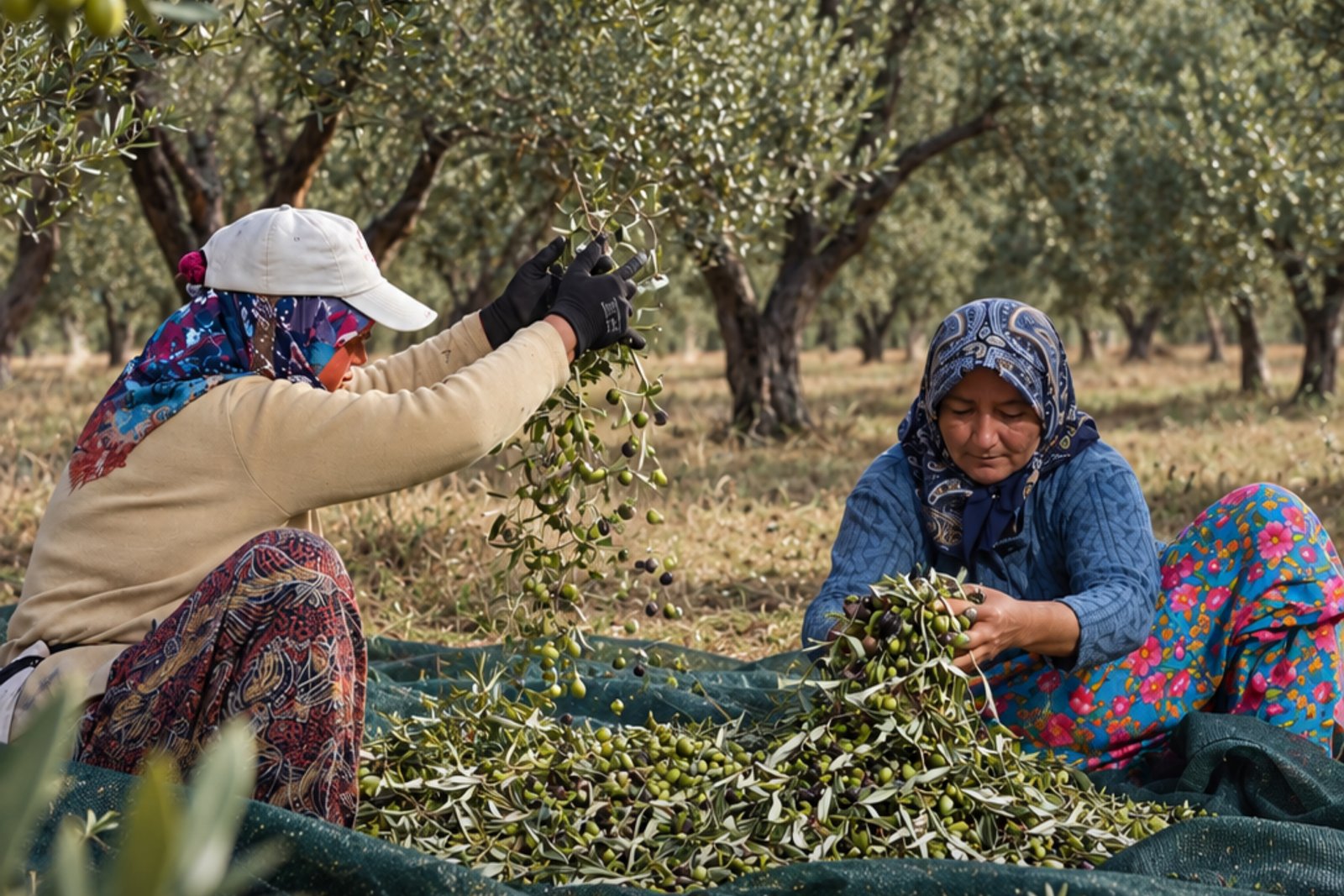
Olives are picked by hand from the twigs that fall onto the nets. Photo: Ninurta
Next time you are on the road to Bozcaada, take another look at these groves.
Where to find Ninurta
Ninurta olive oils are sold on the brand’s own website, ninurta.com.tr, and in all Macrocenter stores in Türkiye.
15% off for Kuzey Ege’ye readers: use the code kuzeyegeye15 at ninurta.com.tr.
Shipping: free on orders of 1,000 ₺ and above. Orders are dispatched within 1–2 business days. Ninurta currently delivers within Türkiye only; for international orders, contact the brand directly.
Trying more than one variety: the bundle option on the website gives 5% off two varieties and 10% off three or more.
The code and shipping terms are valid as of November 2026; check Ninurta’s website for current terms.
Frequently asked questions
Where is Ninurta olive oil produced?
In the village of Alemşah next to Geyikli, in the Ezine district of Çanakkale. The grove covers about 800 decares with nearly 100,000 olive trees.
What does “the world’s 6th best olive oil brand” mean?
It refers to EVOO World Ranking’s 2025 producer ranking, which is built from the points of awards won at international competitions. Ninurta placed 6th with 4,081 points.
Why is early harvest olive oil bitter and peppery?
Because the olives are picked while still green. The bitterness in the mouth and the burn in the throat come from natural phenolic compounds, which are more concentrated in green olives, and are considered a sign of freshness.
Which Ninurta oil should I start with?
North Aegean Blend for everyday use, Arbequina or Lecciana for breakfast and raw use, Trilye, Edremit or Gelin Parmağı for salads and fish, and Troian Blend for meat dishes. The palate test on Ninurta’s website will also suggest a variety.
Does Ninurta have a discount code?
Yes. Kuzey Ege’ye readers get 15% off at ninurta.com.tr with the code kuzeyegeye15.
Where can I buy Ninurta?
On the brand’s own website, ninurta.com.tr, and in all Macrocenter stores in Türkiye.
Where does your olive oil come from?
In the North Aegean, most of us have a family source for olive oil: a village, a relative or a familiar stall at the market. Where does the oil on your table come from, and which variety do you like best? Write to us on Instagram at @kuzeyegeye.
Photos: Ninurta.