The Legend of the King Who Gave Bozcaada Its Name: The Axe of Tenedos
Bozcaada’s ancient name, Tenedos, comes from Tenes, a prince who survived being cast out to sea in a chest. A false accusation, an axe that cut a ship’s rope, Achilles and the double axe on the island’s coins.
Anyone who goes to Bozcaada hears the island’s old name sooner or later: Tenedos. The island owes that name to a prince who was cast out to sea in a chest from the opposite shore. The story of Tenes has a false accusation, a chest, an axe and the most famous hero of the Trojan War. The ancient Greeks even took a saying from it: “the axe of Tenedos”.
In this piece we follow the legend as the ancient authors tell it, from Pausanias to Plutarch, and explain why a double axe appears on the island’s coins. It is the third story in our North Aegean Legends series.
The king on the opposite shore
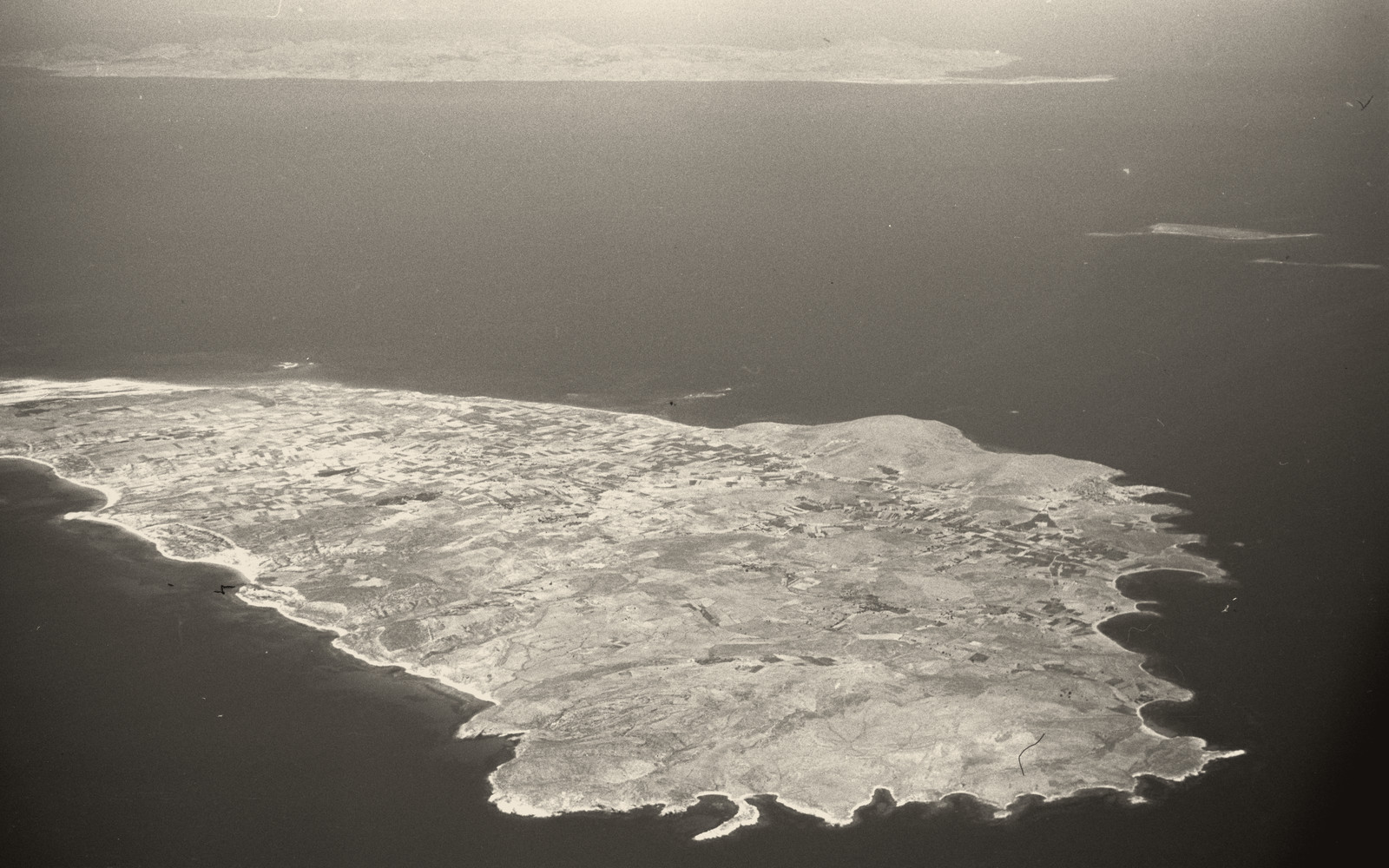
Bozcaada from the air, 28 June 1934. Photo: Walter Mittelholzer, ETH Library, public domain.
The legend begins not on the island but on the shore across from it. According to Pausanias, there was a city called Kolonai in the Troad, directly opposite the island, ruled by King Kyknos, said to be a son of Poseidon. With his first wife Prokleia, Kyknos had two children: a son named Tenes and a daughter named Hemithea. After Prokleia died, the king married Philonome.
In those days the island went by another name: Leukophrys.
A false accusation and a piper
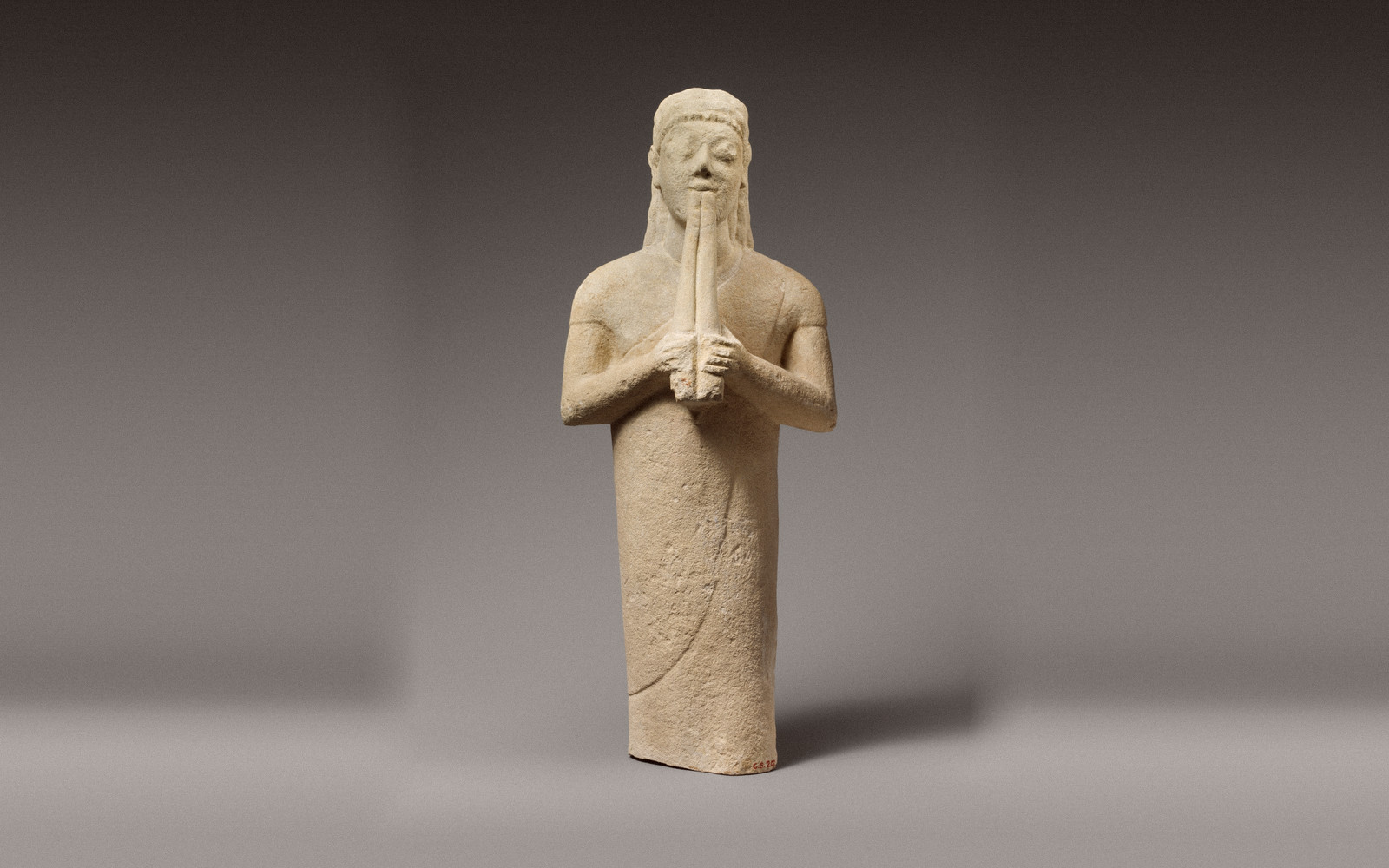
Statuette of a double-pipe player, Cyprus, 6th century BCE. The Metropolitan Museum of Art, public domain.
Philonome fell in love with her stepson Tenes. When he turned her away, she went to the king and told him the opposite of what had happened: it was Tenes, she said, who had approached her and been refused. A witness made the lie stronger. A piper, named Molpos by Plutarch and Eumolpos by Apollodorus, confirmed her story. Kyknos believed his wife.
A chest cast out to sea
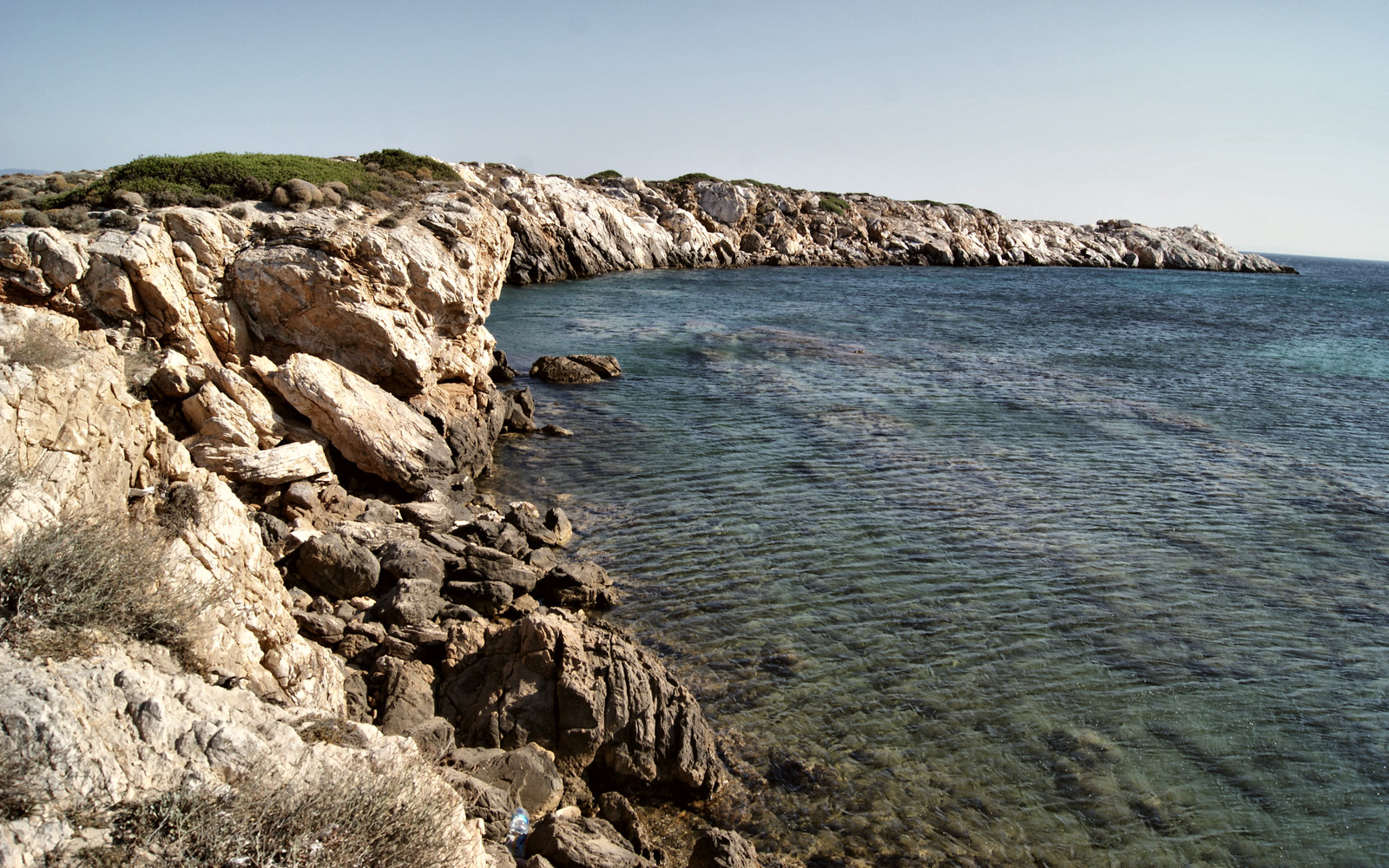
The coast of Bozcaada. Photo: Haluk Cömertel, CC BY 3.0.
The king had the two siblings shut in a chest and set adrift. The waves carried the chest to the island across the strait, and Tenes and Hemithea came ashore alive. A child cast out to sea in a chest is a motif that appears more than once in Greek mythology. This time the story takes place in the North Aegean, and the chest washes up on what is now Bozcaada.
From Leukophrys to Tenedos
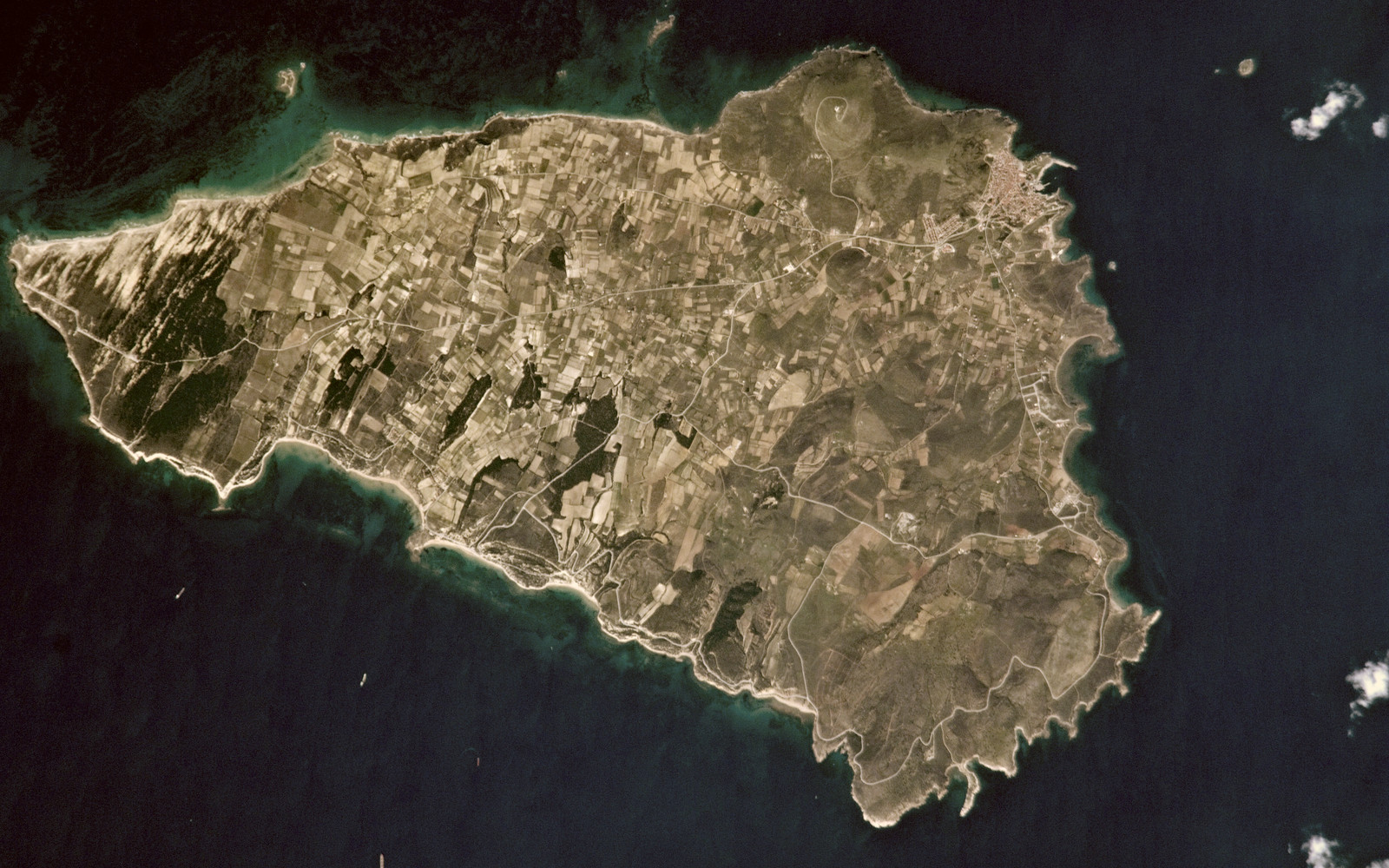
Bozcaada seen from the International Space Station, 24 March 2011. NASA, public domain.
The islanders made the prince who had washed up on their shore their king. The name Leukophrys faded, and the island came to be known as Tenedos, after Tenes. He was not forgotten after his death either: Cicero lists him among the humans the Greeks worshipped as gods.
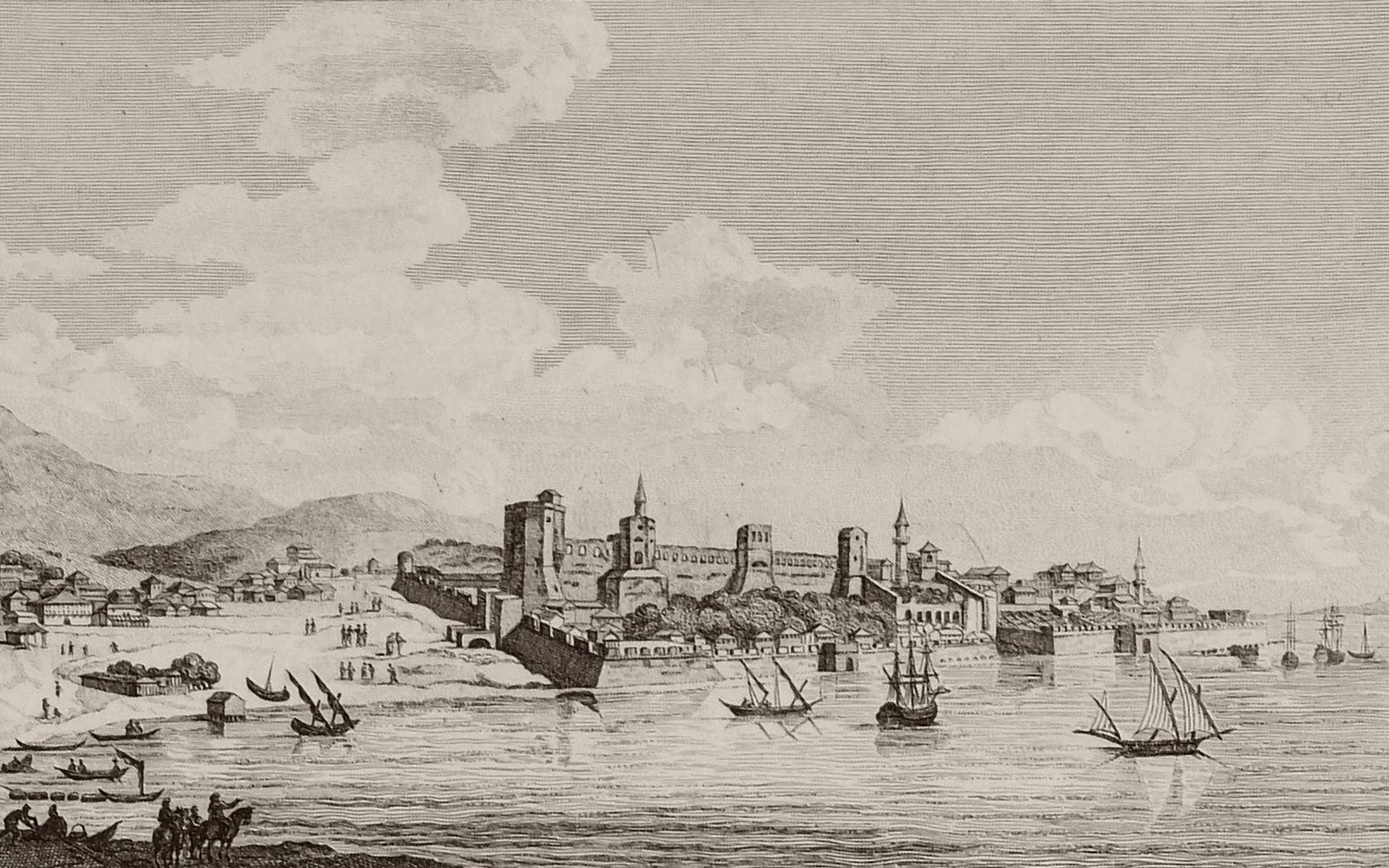
In Greek the island is still called Tenedos today. The engraving at the top of this page comes from the travel book on Greece published by the French ambassador Choiseul-Gouffier in the early 19th century: the castle, the town and sailing boats in the harbour.
The axe that cut the rope
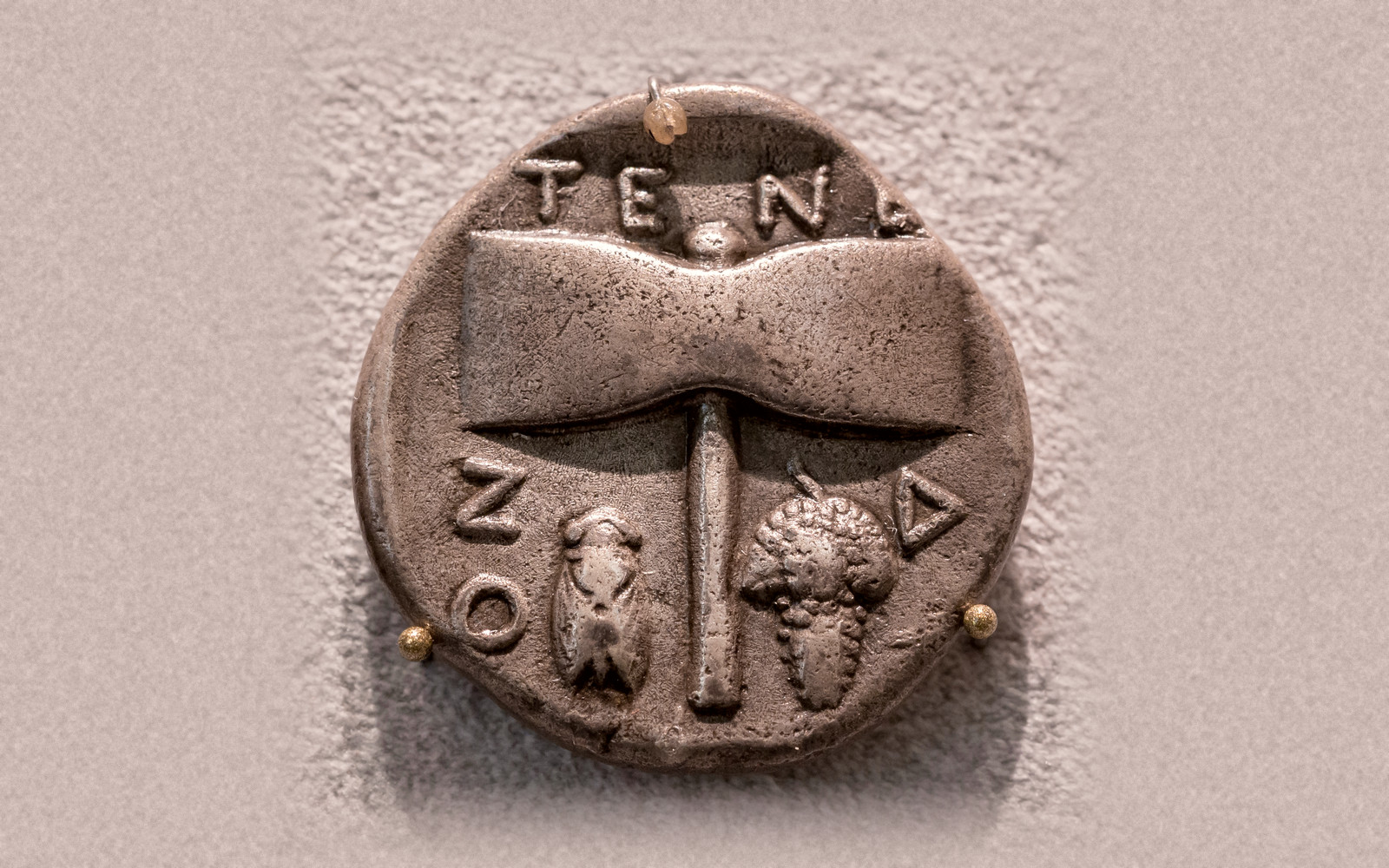
Coin of Tenedos, 375–360 BCE. Berlin, Münzkabinett. Photo: ArchaiOptix, CC BY-SA 4.0.
Years later Kyknos learned the truth. According to the sources he had the lying piper killed, punished Philonome and set sail for Tenedos to ask his son’s forgiveness. Pausanias tells what happened next: as soon as Kyknos reached the island and tied his ship’s rope to a rock or a tree on the shore, Tenes took an axe in anger and cut it. In the version Pausanias tells, father and son never reconcile.
According to Pausanias, from then on the Greeks described a firm and final refusal by saying: “He cut it with the axe of Tenedos.” Pausanias also writes that the axes dedicated at Delphi by Periklytos of Tenedos were linked to this story.
Achilles and the warning of Thetis
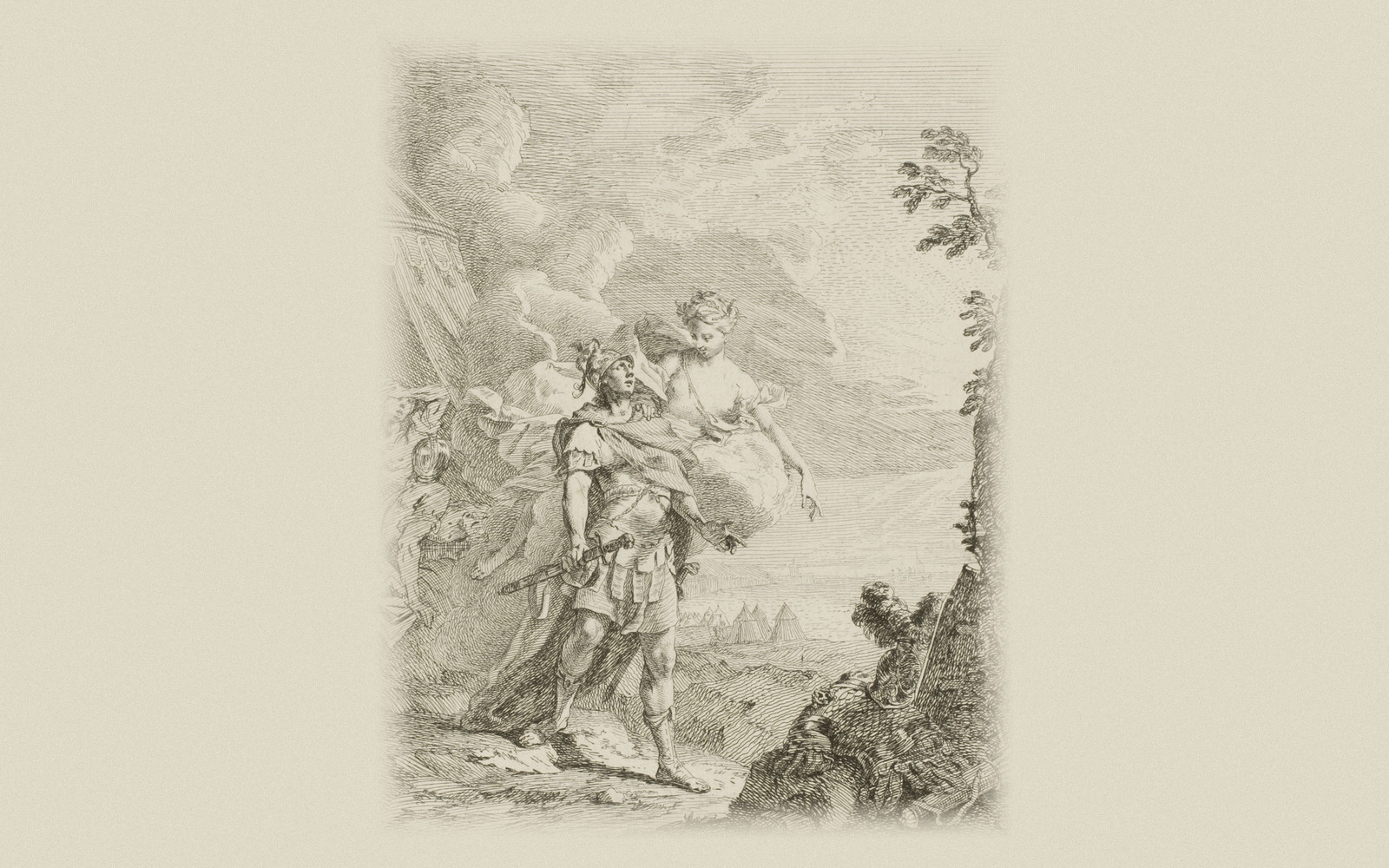
Thetis and Achilles, Johann Heinrich Tischbein, 1757. Art Institute of Chicago, CC0.
The second half of the story reaches into the Trojan War. On its way to Troy, the Greek fleet stopped at Tenedos. According to Apollodorus, Achilles’ mother, the sea goddess Thetis, had warned her son in advance: if he killed Tenes, he would himself die at the hands of Apollo. In some versions Tenes is a son of Apollo, which is why the warning is so grave.
In the version Plutarch records, Achilles kills Tenes as he tries to protect his sister Hemithea; realising his mistake, he buries him, and Tenes’ sanctuary is later built on that spot. Pausanias simply says Tenes died defending his country. Given that Achilles himself died at Troy by an arrow guided by Apollo, the warning was not in vain.
Two rules in the sanctuary
The people of Tenedos built a sanctuary for Tenes, and two rules held there for centuries. According to Plutarch’s Greek Questions, no piper was allowed in, because it was a piper who had borne false witness against Tenes. Nor could anyone speak the name of Achilles inside. Diodorus mentions the same two rules.
The two faces of the coin
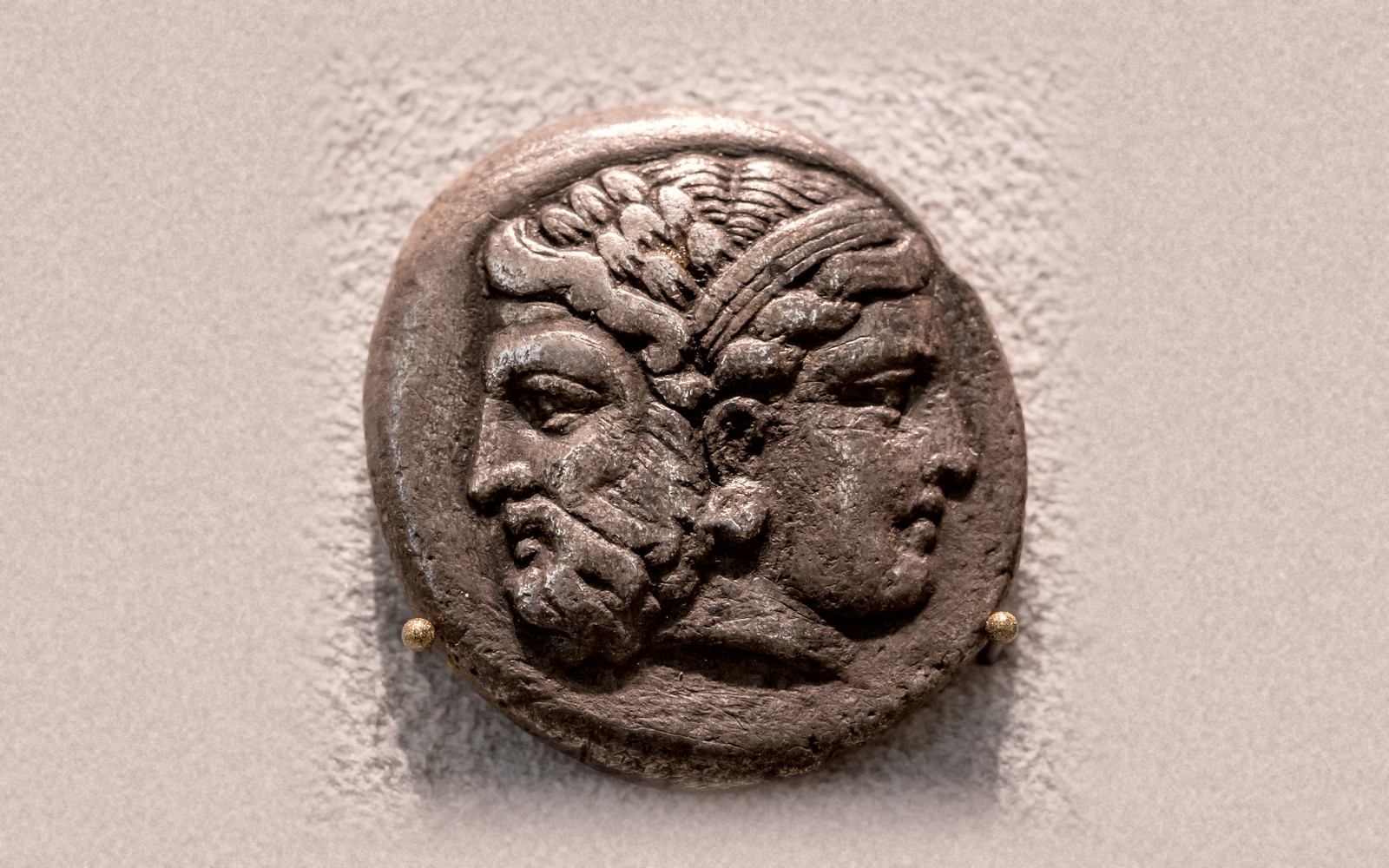
Coin of Tenedos, 360–340 BCE. Berlin, Münzkabinett. Photo: ArchaiOptix, CC BY-SA 4.0.
Ancient coins of Tenedos show a double axe on one side and a double-headed face on the other: a bearded man and a woman. Who the two heads are has no single answer; catalogues often name them Zeus and Hera.
The meaning of the axe was already debated in antiquity. One explanation links it to the axe Tenes used to cut the rope. Another, attributed to Aristotle, says it recalls the strict laws Tenes laid down, under which adulterers were punished with the axe.
Where is the legend today?
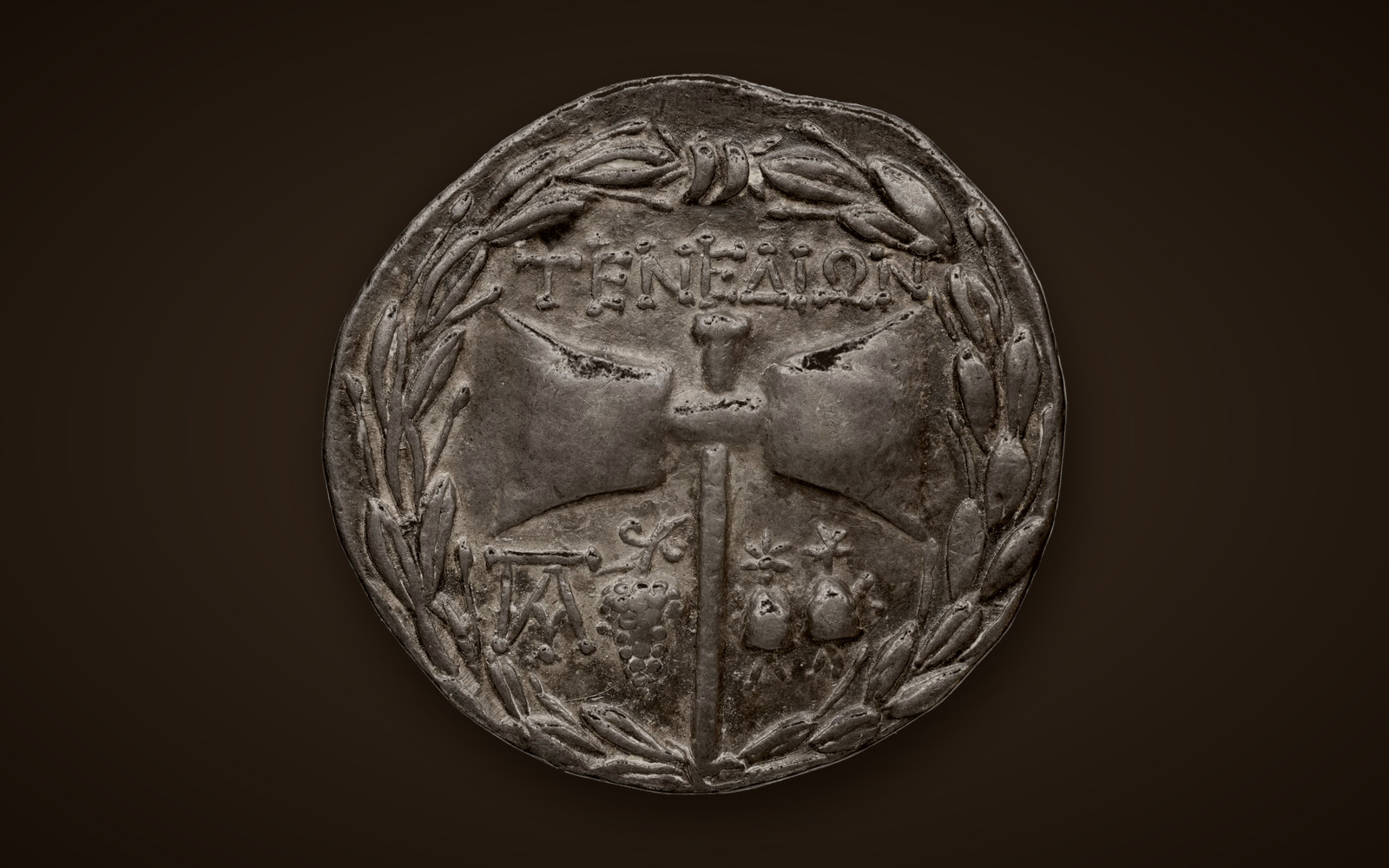
Coin of Tenedos inscribed ΤΕΝΕΔΙΩΝ, “of the Tenedians”. Paris, Bibliothèque nationale de France, public domain.
The site of Tenes’ sanctuary is unknown today. His statue left the island long ago: in the 1st century BCE the Roman official Verres carried it off from Tenedos. In the case brought against Verres, Cicero describes the statue as masterfully made and says the whole city mourned as it was taken away.
What remains of the legend is the island’s name, coins kept in Berlin and Paris, and a saying. Look east from Bozcaada towards the Anatolian shore, and you are looking at the coast where the story began.
Frequently asked questions
Why was Bozcaada called Tenedos in antiquity?
According to the legend, the island took the name of Tenes, who washed ashore in a chest and was made king by the islanders. Its earlier name was Leukophrys.
What does “the axe of Tenedos” mean?
The ancient Greeks used it for a firm and final refusal. According to Pausanias, the saying comes from Tenes cutting the rope of his father’s ship when he came to ask for forgiveness.
What does the double axe on the coins of Tenedos stand for?
Ancient writers give two explanations: the axe Tenes used to cut the rope, and the strict laws he laid down. The other side of the coins shows a double-headed face.
Which legend would you like to hear next?
After the flesh-eating stone of Assos and Şeytan Sofrası in Ayvalık, North Aegean Legends continues with Bozcaada. Tell us on Instagram at @kuzeyegeye which place’s story you would like to hear next. For places to stay and eat on the island, see our Bozcaada page.
Sources: Pausanias, Description of Greece 10.14; Plutarch, Greek Questions 28; Apollodorus, Epitome 3.23-26; Diodorus Siculus, Library of History 5.83; Cicero, Against Verres 2.1.49 and On the Nature of the Gods 3.39. Differences between the versions are noted in the text. Images: Choiseul-Gouffier, Voyage pittoresque de la Grèce (public domain); Walter Mittelholzer, ETH Library (public domain); The Metropolitan Museum of Art (public domain); Haluk Cömertel (CC BY 3.0); NASA (public domain); Berlin Münzkabinett, ArchaiOptix (CC BY-SA 4.0); Art Institute of Chicago (CC0); Bibliothèque nationale de France (public domain).