November Skies: How to Watch the Leonid Meteor Shower and the 24 November Supermoon from the North Aegean
Leonids on the night of 17–18 November, a supermoon on 24 November: when to look, how to photograph them and where to watch in the North Aegean.
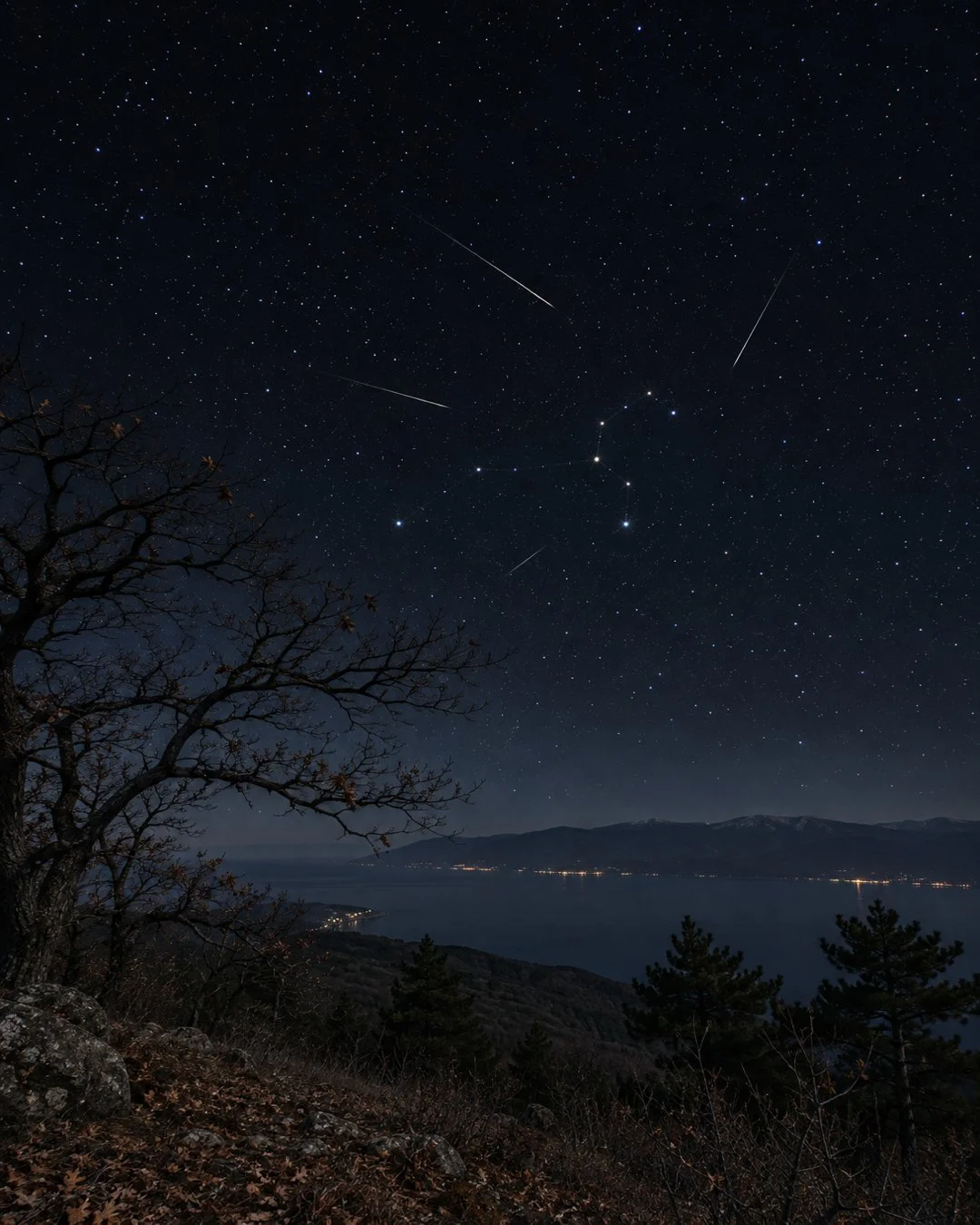
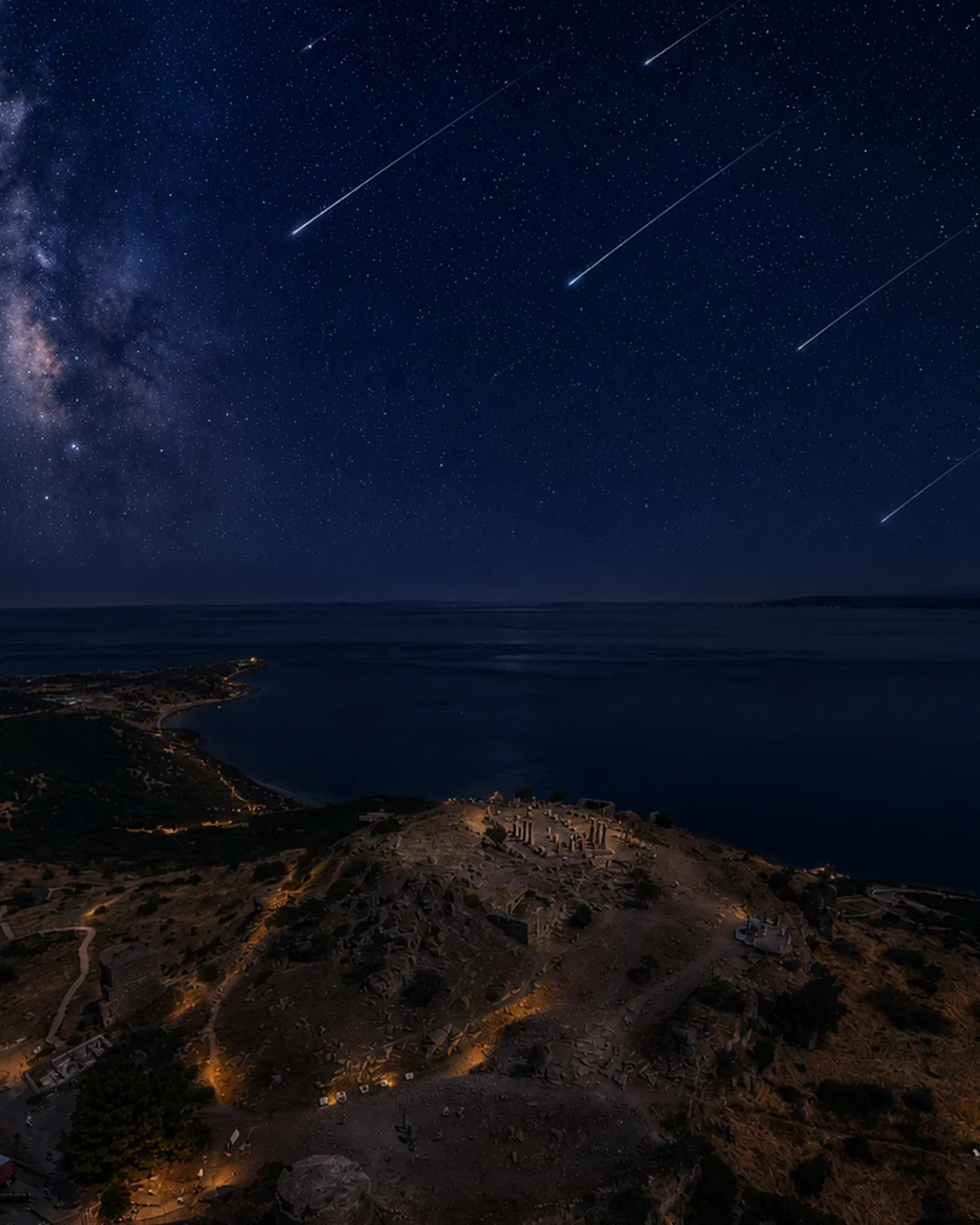
November’s sky holds two appointments. On the night of 17 to 18 November, the Leonid meteor shower reaches its peak; a week later, on the evening of 24 November, one of the year’s largest full moons rises. Both can be watched with the naked eye, and for both, the North Aegean’s coasts and hills, away from the lights, make a good stage.
In this article we explain what the Leonids are, when to look this year and how to watch and photograph them; then we list five viewing spots and three places for the supermoon.
In this article
What are the Leonids?
When should you look this year?
What else is in the sky that night?
How to watch
If you want to take photos
Where to watch: five spots
24 November: the supermoon
What’s next?
Frequently asked questions
What are the Leonids?
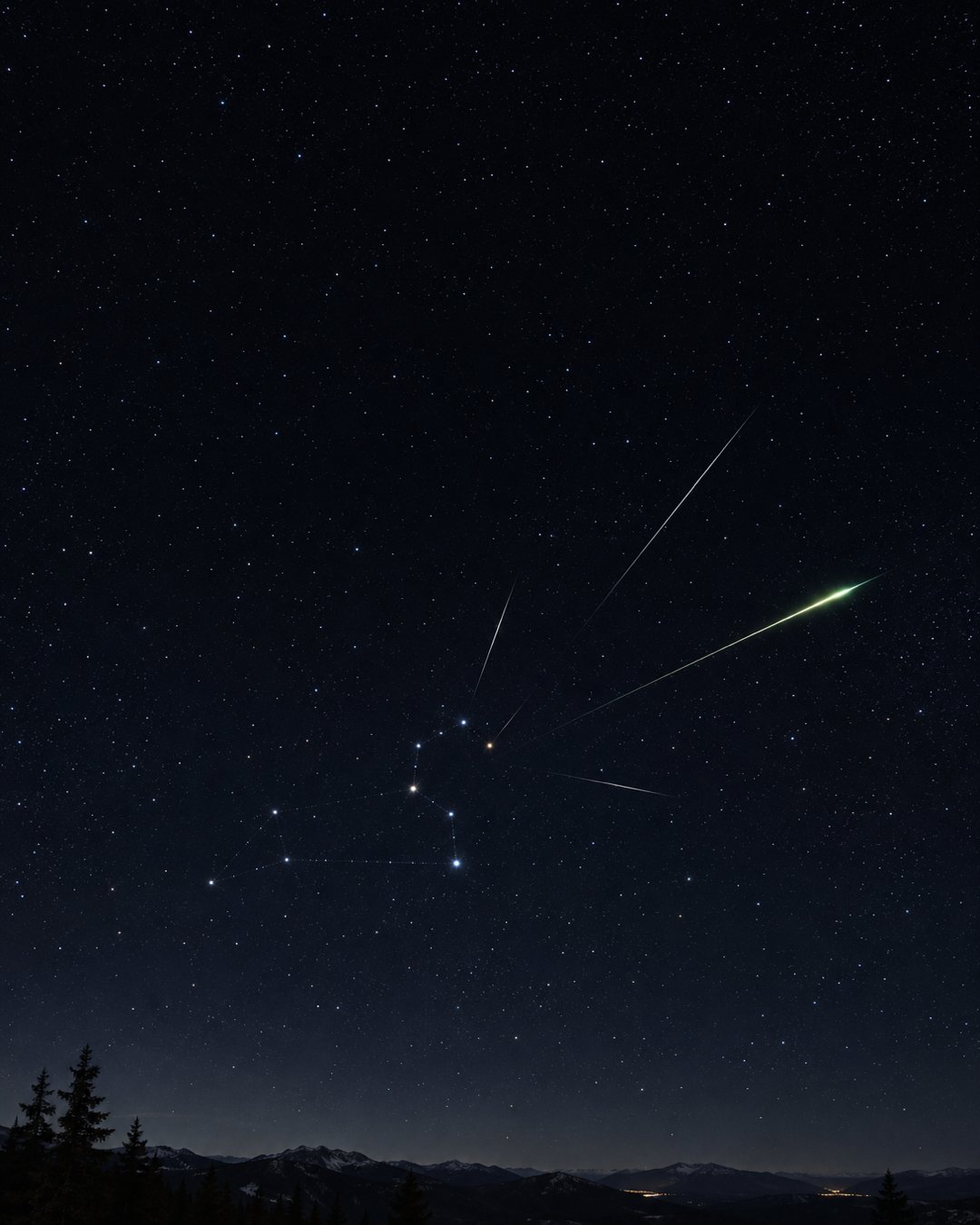
Every November, Earth passes through the cloud of dust that comet 55P/Tempel-Tuttle has left along its orbit. Particles as small as grains of sand enter the atmosphere at about 70 km per second and burn up through friction; these are the shooting stars we see in the sky. Because all the trails seem to come from the same point in the sky, in the constellation Leo, this shower is called the Leonids.
Tempel-Tuttle orbits the Sun about once every 33 years. In years close to the comet’s passage, if Earth runs into a dense trail of dust, a “meteor storm” can occur; in 1833 and 1966, thousands of meteors were seen per hour. No such storm is expected this year. According to the International Meteor Organization, in a normal year about 15 meteors per hour can be seen under a dark, clear sky.
When should you look this year?
The Leonids are active for most of November, but the busiest night is the night of 17 to 18 November. The International Meteor Organization gives the peak as 23:45 UT on 17 November, which is 02:45 on 18 November in Turkey time. The times below were calculated for Çanakkale; across the North Aegean they differ by a few minutes:
17:56: The sun sets. In the evening there is a Moon a little more than half full in the sky, so it does not get fully dark yet.
00:24: Leo, the constellation the meteors appear to come from, begins to rise in the east.
00:57: The Moon sets and the sky grows dark.
02:00–06:15: The best time. Leo stands 28° above the horizon at 03:00 and 50° at 05:00; the higher it is, the more meteors you will see.
06:28: Dawn begins to break; the sun rises at 08:03.
If the night of 17–18 November is cloudy, you can also try the night before or the night after; the numbers drop a little.
What else is in the sky that night?
This year’s Leonid night holds one more surprise, right inside Leo, where the meteors come from: Jupiter and Mars are in the same constellation, only 1.4° apart. That is about the width of three full moons lined up side by side in the sky. The two rise in the east at 00:33, together with Leo. Jupiter is the brightest point of the night; the reddish light right beside it is Mars. Regulus, the brightest star in Leo, is 4° away from them.
In the evening, Saturn is visible in the southeast; it sets at 04:04. Before dawn, at 05:23, Venus rises in the east, and at 06:30, 12° above the horizon, it is the brightest point in the sky. So while you wait for meteors through the night, you can also see four planets with the naked eye.
How to watch
No telescope or binoculars needed. Meteors appear all over the sky; seeing a wide stretch of sky matters more than magnification.
Get away from lights. Choose a spot a few kilometres from town and village lights, with an open view to the east.
Let your eyes adjust to the dark. The eye adjusts in 20–30 minutes. Turn off your phone screen, and if you need a torch, use a red light.
Watch lying down. A mat or a deckchair, a blanket and a hot drink decide how comfortable your night will be.
Dress warmly. In November, even on the coast, night temperatures drop to around 9 °C, and it is colder on the hills.
Be patient. Meteors do not arrive at regular intervals; you may see none for a few minutes, then two or three in a row.
If you want to take photos
Photographing meteors takes some luck, but the right settings improve your chances. Mount the camera on a tripod, fit your widest-angle lens and set the focus manually to infinity. Open the aperture all the way (f/2.8 or wider), and try ISO 1600–3200 with exposures of 15–25 seconds. Point the camera slightly to one side of Leo, keeping part of the horizon in the frame, and switch to continuous shooting. On phones, night mode and a steady support are enough to capture the stars on a clear night.
Where to watch: five spots
In October, for the Orionids, we suggested Yıldızkoy on Gökçeada (Imbros), Polente Lighthouse on Bozcaada (Tenedos), Babakale, the Altar of Zeus above Adatepe and Şeytan Sofrası (the Devil’s Table) in Ayvalık; all of them work in November too. This time we are adding five new places.
Pateriça, Cunda (Alibey Island)
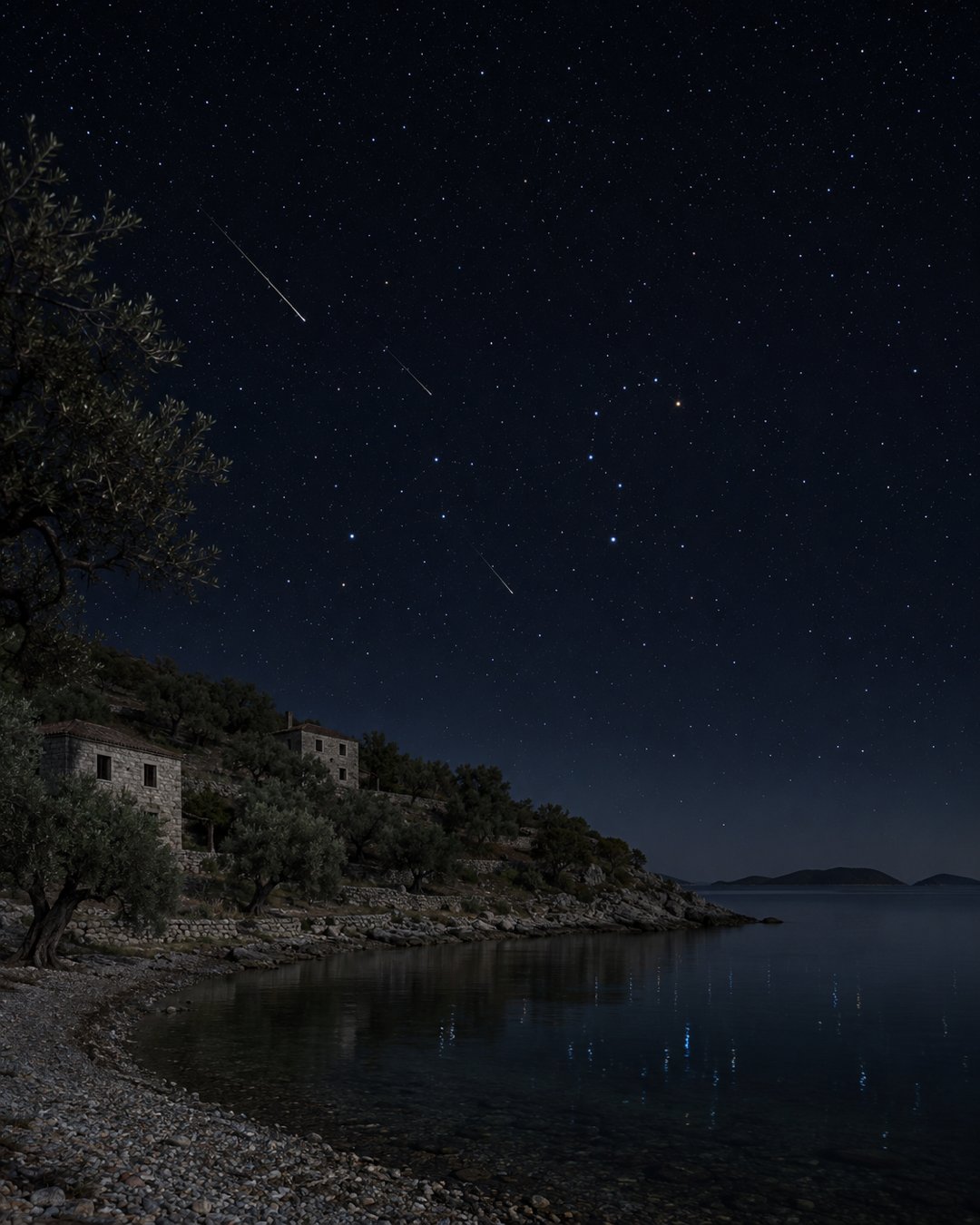
A cove and peninsula in the north of Cunda. Olive groves, old stone houses left by the island’s Greek community and a shore with little light. The Ayışığı Monastery is on this peninsula too; it is also a good choice for the supermoon evening.
Çataltepe, Cunda
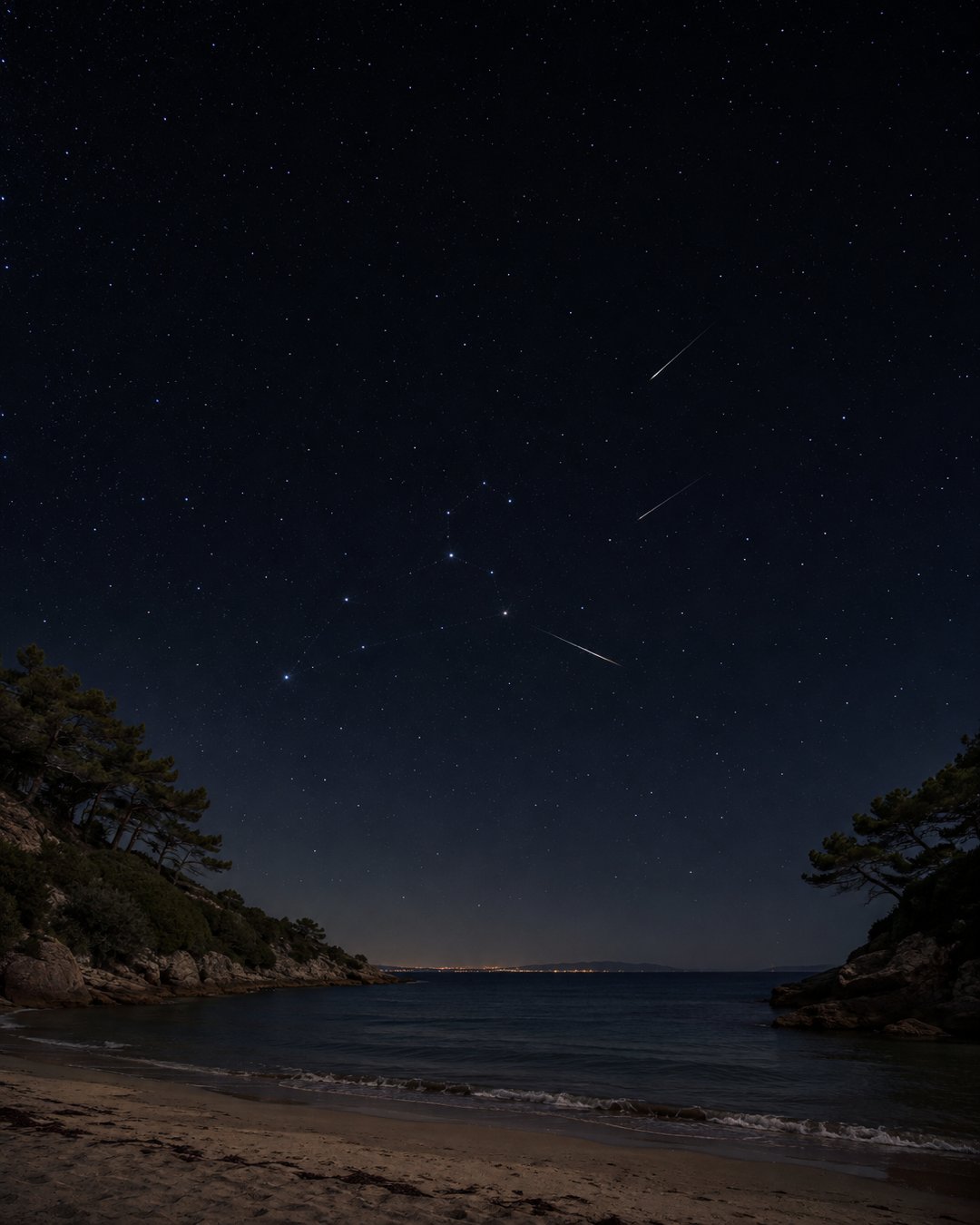
A quiet beach about 20 minutes by car from the centre of the island. The shore, crowded in summer, is silent in November, and there is little building around it.
Aydıncık, Gökçeada
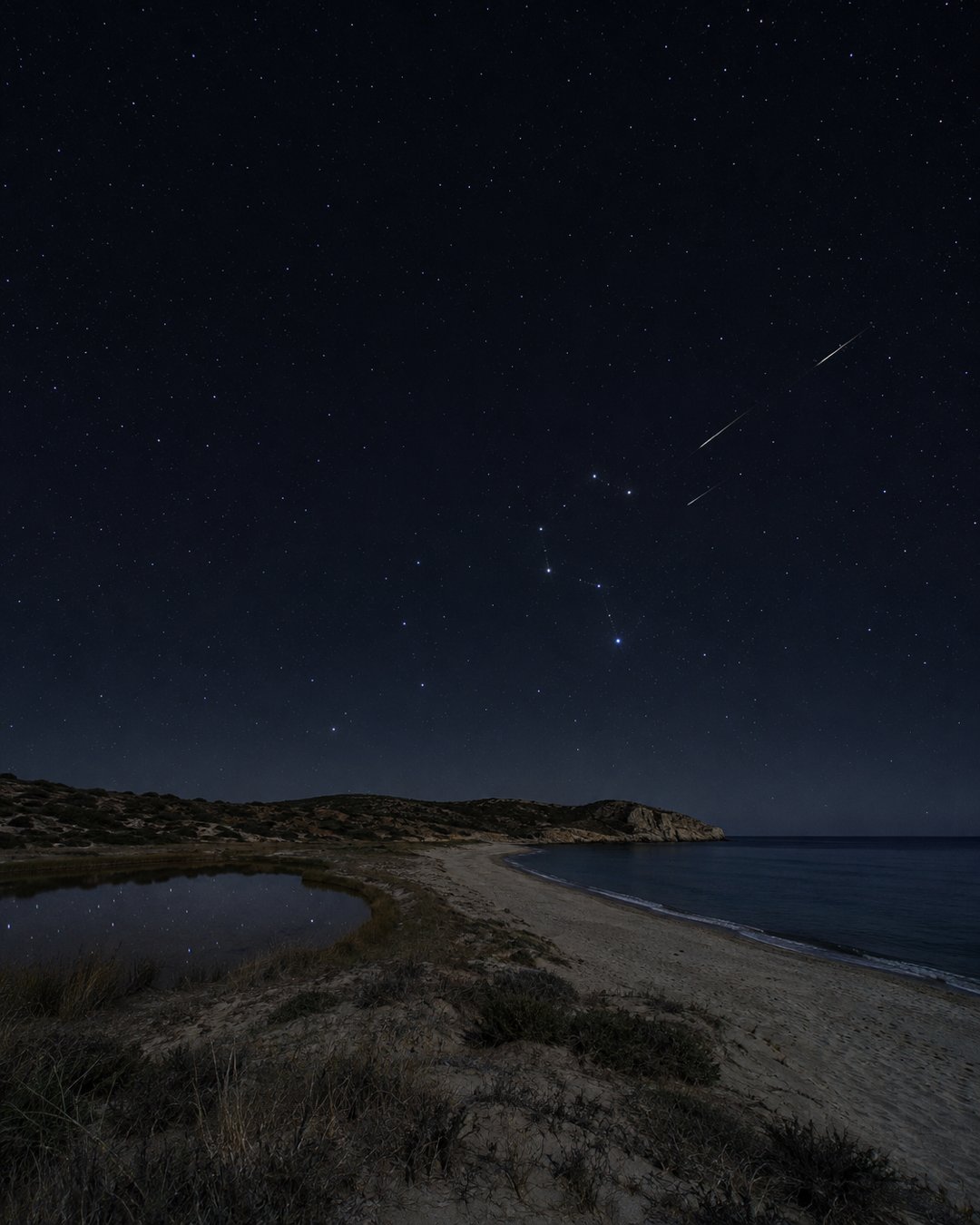
A beach at the southeastern tip of the island, stretching between the salt lake and the sea. It is far from the village lights and almost empty in November. Since you will reach Gökçeada by ferry, check the weather and the sailing times in advance.
Kemikli Burnu, Gelibolu (Gallipoli) Peninsula
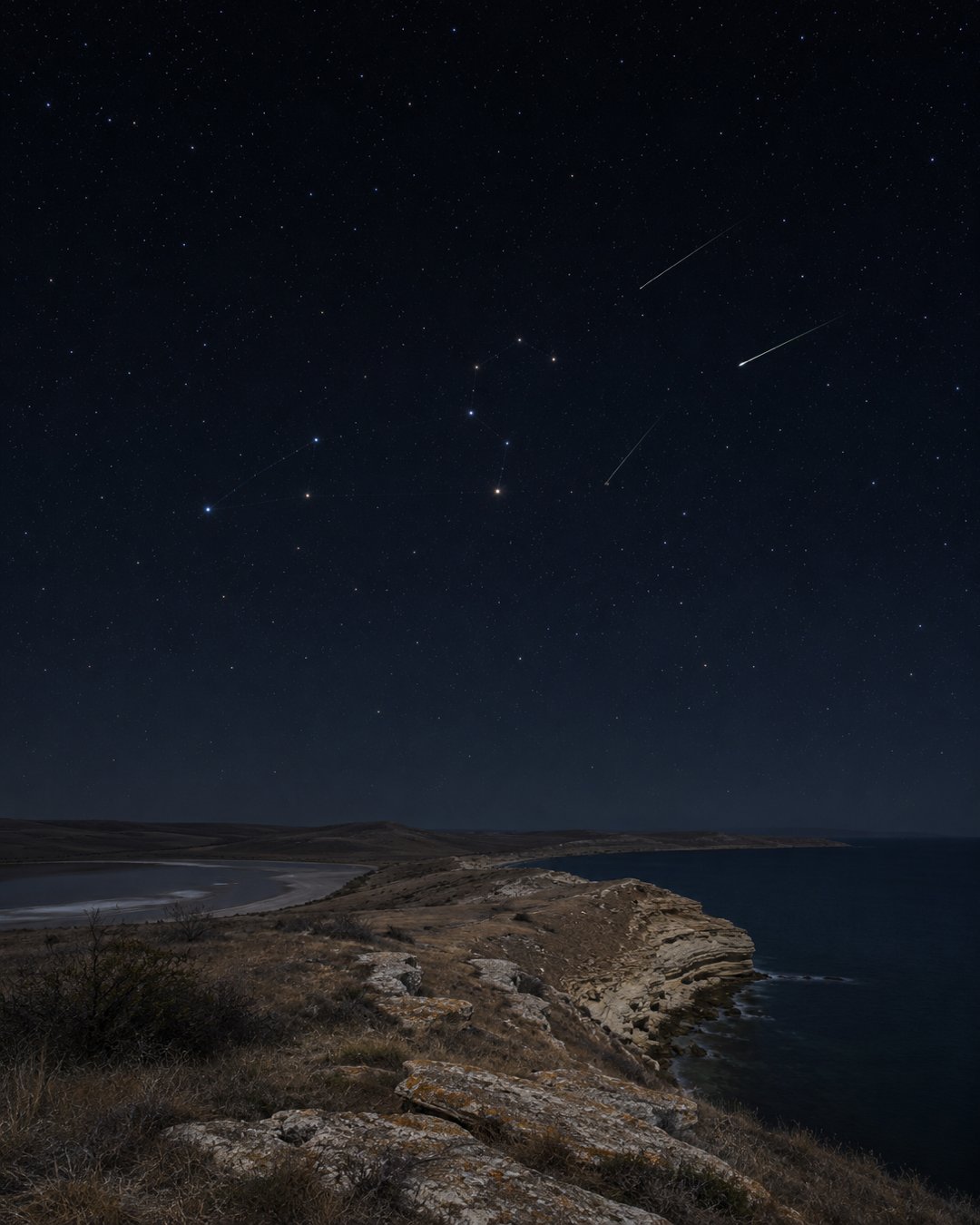
The cape that closes off Suvla Bay, inside the Gelibolu Peninsula Historical Site. There are no settlements nearby; on one side lies the Tuz Gölü salt lake, on the other the open Aegean. Drive the road carefully at night, and dress warmly against the wind on the cape.
Evciler, Kazdağları (Mount Ida)
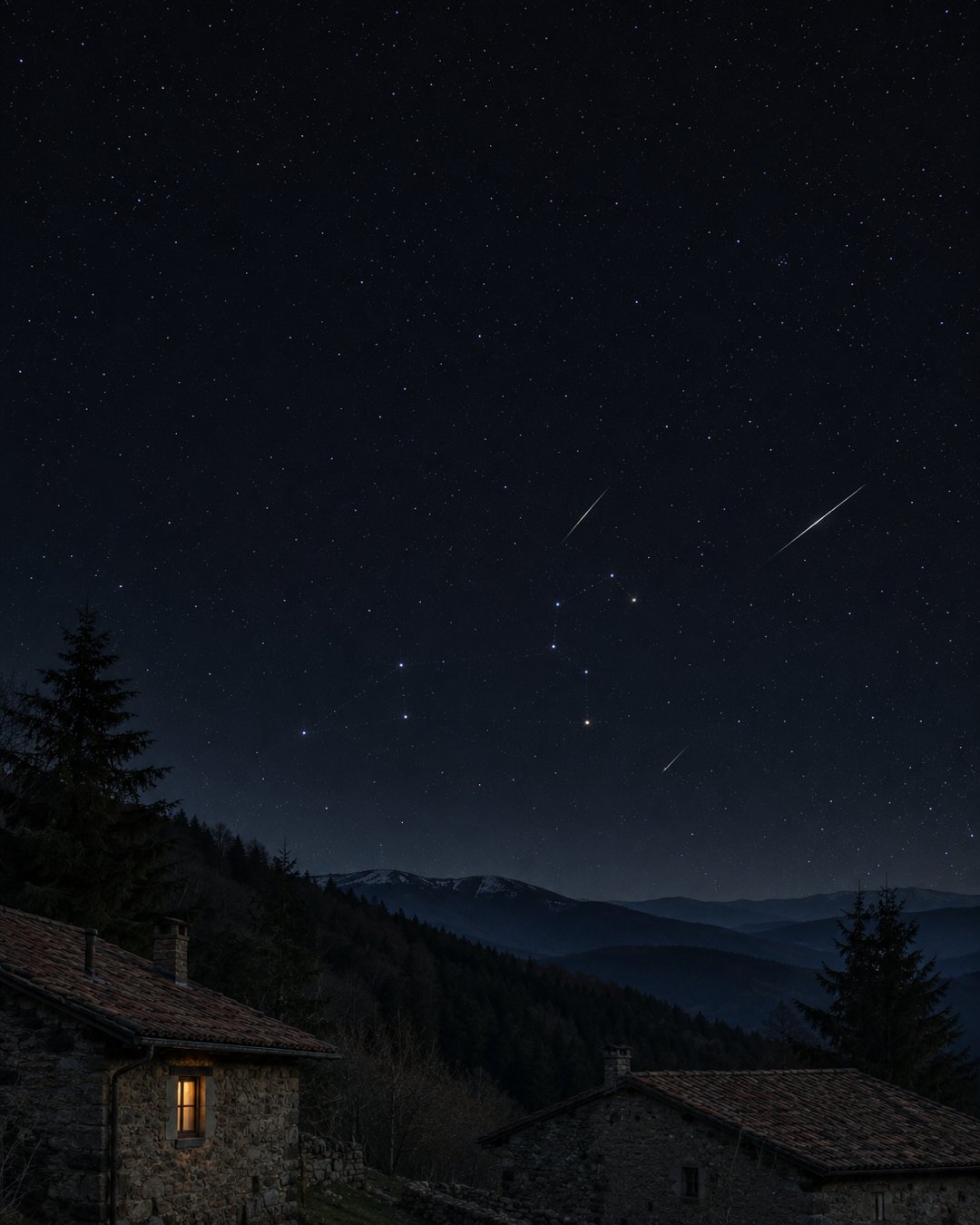
Evciler, in the district of Bayramiç, is a mountain village on the northern slope of Kazdağları, on the road to Ayazmapınarı. Moving a few hundred metres away from the village lights is enough. Night temperatures on the mountain are lower than on the coast; in late November, check the road conditions as well.
24 November: the supermoon
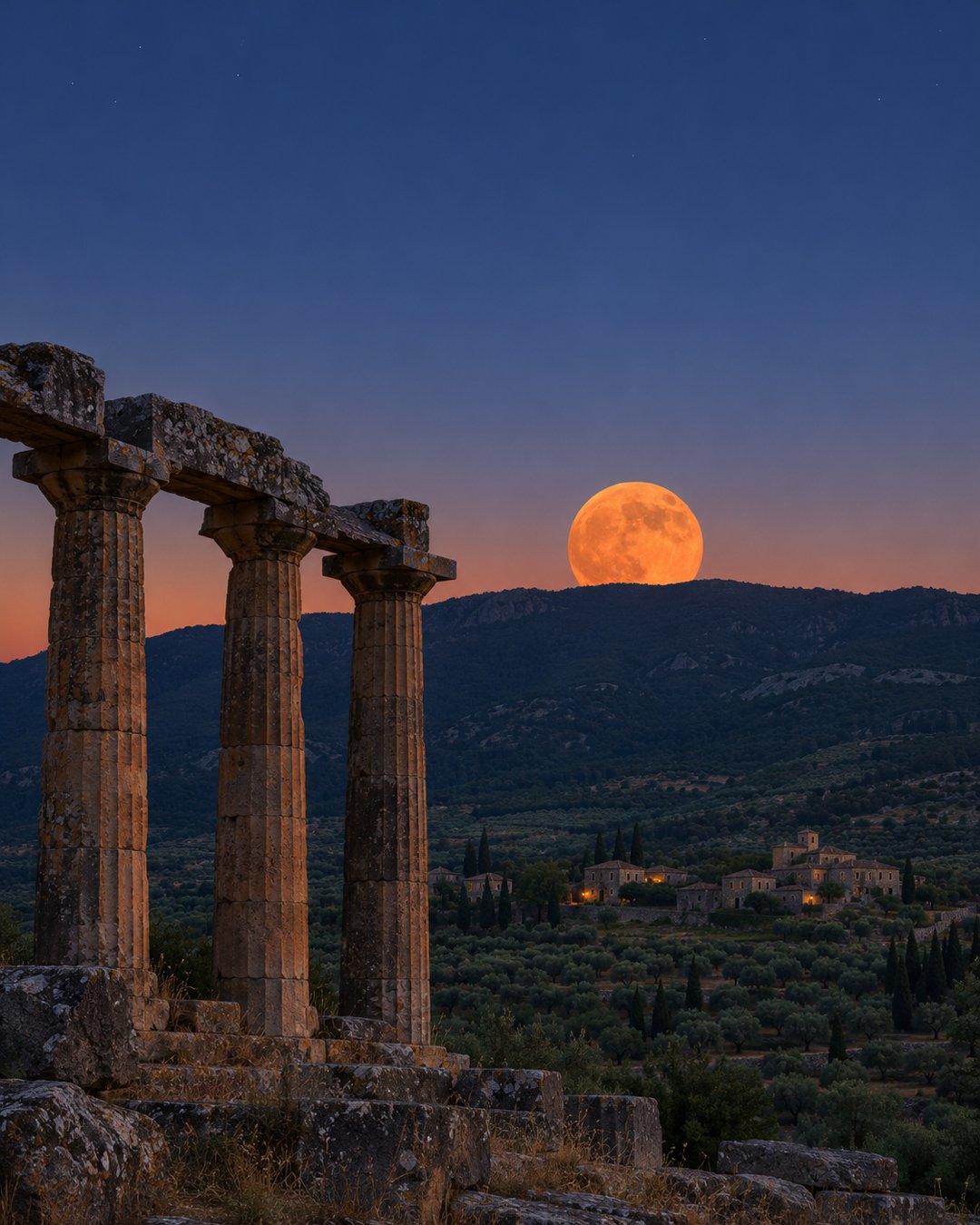
The Moon’s orbit around Earth is slightly elongated; at times the Moon comes closer, at times it moves farther away. When a full moon falls on the days when the Moon is closest to Earth, it looks a little larger and brighter than an ordinary full moon; this is called a supermoon. On the evening of 24 November, the Moon will be about 360,000 km from Earth. The year’s closest full moon is on 24 December, but the November full moon also counts as a supermoon.
When: The Moon becomes full at 17:53 on 24 November. It rises in the northeast at 17:21 and the sun sets at 17:51, so for half an hour both are in the sky at once. The Moon looks largest and most orange when it is close to the horizon, which makes the first half hour after it rises the best moment.
Where: Any place with an open view to the northeast will do. Our three suggestions:
Assos: Seen from Assos, the Moon rises over Kazdağları.
Bozcaada: Around the castle by the sea; the Moon rises over the water.
Cunda, Pateriça: The peninsula where the Ayışığı Monastery stands.
If you are taking photos, use a long (telephoto) lens and frame the Moon together with a hill, a castle or a tree; that is the best way to convey its size.
What’s next?
The North Aegean’s sky calendar is full in December too. On the night of 13 to 14 December comes the Geminid shower, one of the year’s most active meteor showers; that evening the Moon is a thin crescent and sets early, so the night stays dark. On 24 December, the year’s closest full moon to Earth rises. The spots in this article work for both.
Frequently asked questions
Do I need a telescope to see the Leonids?
No. Meteors are watched with the naked eye; telescopes and binoculars narrow your field of view, so they do not help.
How many meteors can I see per hour?
Around 10–15 per hour under a dark, clear sky. In city light, the number falls to just a few.
Which direction should I look?
The meteors appear to come from Leo, a constellation that rises in the east after midnight. Still, you can see them anywhere in the sky; it is enough to face east and look at a wide stretch of sky.
What if the night of 17–18 November is cloudy?
Try the night before or the night after. The numbers drop a little, but the shower lasts several days.
Can you notice the supermoon with the naked eye?
The difference is small, but near the horizon, especially next to a hill or a building, the Moon looks larger. The most striking moment is the first half hour after it rises.
Where do you watch the sky from?
Send us your photos and we will share the best ones. If you know a dark spot, write to us so it can make the next list.
Images are illustrative. Times are calculated for Çanakkale.